
Marketing

A Review Rubric for Model-Written First Touch Copy

Antonio Evans9 min read

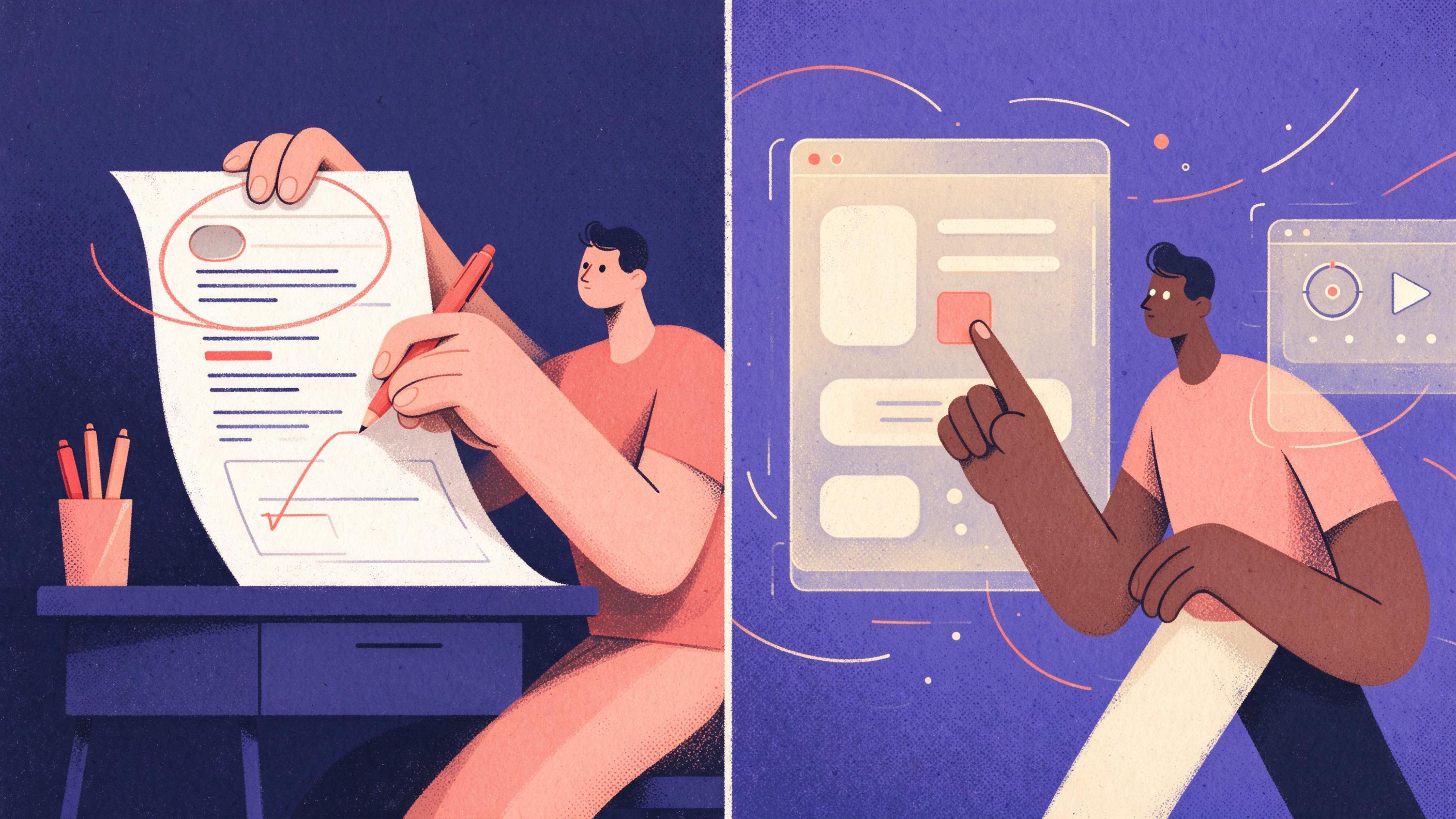
A split-screen scene: on the left, a human reviewer at a desk marks a printed copy of a short email with a red pen, circling the opener and writing a score in a margin box; on the right.
Key points

Key points

  1. 1Apply five scored items to every first touch: opener specificity, relevance link, single ask, voice match and factual safety.
  2. 2Treat opener specificity and factual safety as pass/fail gates, so a cheerful average score cannot hide a fabricated detail.
  3. 3Score against written anchor descriptions for 1, 3 and 5, because models and human reviewers disagree most at the middle.
  4. 4Record disagreements and arbitrate one rule at a time, so the rubric gets sharper without anyone rewriting the scale.

Why first-touch copy needs a rubric, not a taste test

Model-written openers fail in predictable ways. They invent a detail, they praise something vague, they stack three asks, or they drift into a house style that no human on the team uses. A reviewer reading forty of them in one sitting cannot hold all five failure modes in mind and stay consistent.

The rubric exists to make the decision repeatable, whether the second reader is a person or another model. Research on large language models acting as judges shows that agreement between judges depends heavily on how the evaluation task is framed and on the dimensions being scored, which is why dimension-by-dimension anchors beat a single holistic grade (Aminab, Salminen and Jansen).

The concrete bar for a specific opener comes from practitioner guidance on first lines: start with a checked company fact, connect it to a relevant offer, and keep it short enough to understand on the first read (Datablist). That sentence contains two separate judgments, fact-checking and relevance, which is why they get separate scores.

Subject lines and call notes fit the same five items. A subject line's "opener specificity" is the specific detail it names; its "single ask" is whether it promises one thing rather than listing three. A call note's "voice match" is whether the phrasing sounds like the rep who will dial, not like a summary written by a bot.


The five items and their anchors

Each item is scored 1, 3 or 5. Use the anchor text, not a feeling. If a draft sits between anchors, score down.

ItemScore 1Score 3Score 5Gate
Opener specificityGeneric praise or a claim true of any companyNames a public fact but not verifiable from the recordNames a dated or checkable fact with its source in the sheetYes
Relevance linkSecond sentence jumps to the productConnects the fact to a workflow looselyConnects the fact to a problem the recipient's role ownsNo
Single askThree or more asks, or noneOne ask buried after a second suggestionExactly one ask, answerable in a sentenceNo
Voice matchModel default: "I hope this finds you well" or stacked adjectivesClose to the sender's style with one off noteReads like the sender's other sent mailNo
Factual safetyContains a claim nobody can traceAll claims traceable, one needs a phone checkEvery claim traced to a source in the rowYes

Two gates, three scored items. A draft that fails a gate is rejected regardless of its total out of 25, because a beautiful email built on an invented funding round is worse than a dull one built on a real job listing.

Opener specificity

The useful distinction is between a fact and a diagnosis. "Your careers page lists a data-operations role" is a fact. "Your data team is drowning" is a diagnosis you cannot support, even if the first sentence is true (Datablist). Score 5 only when the reviewer can find the fact in the source column within ten seconds. Score 3 when the fact exists but the row does not say where it came from. Score 1 for anything a competitor could paste into their own email unchanged.

Relevance link

This is where most drafts score 3. The link is real but weak: the fact is interesting, the offer is adjacent, and nothing in the sentence says why this recipient's job gets harder. Score 5 when the second sentence names a workflow the role owns and the cost of the current way of doing it, without asserting that the problem exists. A question is often the safest form: it asks about the workflow and leaves the recipient room to disagree.

Single ask

Count the verbs that request something. "Worth a look?", "happy to send details", and "open to a call?" is three asks dressed as one paragraph. Score 5 means one ask, phrased so a one-word reply resolves it. Resquared's guidance on sequences makes the same point at the message level: keep each message focused on the same clear offer or question and ask for an easy next step (Resquared).

Voice match

Voice match is the item models and reviewers disagree on most, because "sounds like us" needs evidence. Two workable sources: the last twenty emails the sender actually wrote, and a short style note covering sentence length, contractions, greetings and sign-off. Score 5 when a colleague shown the draft and a real sent email, in random order, cannot tell which is which. Score 1 for phrases the sender never uses, and for the polite filler that appears when a model has nothing specific to say.

Factual safety

Every claim in the draft gets a line in the source column, or it gets cut. That includes the small ones: headcount, funding, tool names, a quoted statistic. This is not bureaucracy, it is what separates a personalization system from a liability. The broader lesson from platform-scale misinformation research is that automated checking helps most when it is paired with a low-cost human habit of pausing before sharing (Glauser, JMIR). In outbound, that habit is the reviewer's ten-second source check.

A practical enforcement step: forbid numbers in openers unless the row carries a URL and a read date. Numbers are the claims most likely to be wrong and most likely to be believed.

Where reviewers and second models disagree

Run the rubric on a batch of twenty drafts with two reviewers, then compare. Disagreements cluster in four places.

Praise versus observation. One reviewer reads "love what you're building in logistics" as specific because it names an industry; the other scores 1 because it is unfalsifiable. Rule: praise scores 1 by default, and the fix is to replace it with a checkable fact.

The weak link. Two reviewers both score relevance 3 but for opposite reasons: one thinks the link is too loose, the other too pushy. This is an anchor problem, not a reviewer problem. Sharpen the score-3 anchor until both can place the draft on the same side of it.

Voice, without a reference set. Reviewers who have not read the sender's sent mail guess. Fix by attaching the reference set to the rubric, not to the reviewer's memory.

Gate disputes. A reviewer wants to pass a draft whose only untraceable claim is a job title. Rule: titles are claims. If the row does not show where the title came from, the draft fails factual safety and the fix is a data cleanup, not a rewrite.

Track a simple agreement rate: on each item, the share of drafts where two reviewers landed on the same score. Items below roughly 70 percent agreement need anchor work before the rubric is used to reject anything at volume. Publish the number alongside the scores so nobody mistakes a low agreement rate for a weak batch.

Model judges show the same pattern: agreement is not uniform across dimensions, so a single overall grade hides exactly the disagreements a rubric is supposed to surface (Aminab et al.).

Worked example: three drafts, three verdicts

Take a fictional sender selling a scheduling tool to dental groups. The source row says: the group's site lists four locations, and a job posting for a front-desk coordinator was live on the careers page on the read date.

Draft A (email opener). "Hi Priya, I love how Riverbend Dental is transforming patient experience. We help groups like yours save hours every week. Open to a quick call, or should I send a one-pager, or connect you with a case study?"

Scores: specificity 1 (unfalsifiable praise), relevance 3 (adjacent, not role-owned), single ask 1 (three asks), voice 3 (plausible but generic), factual safety 3 (nothing false, nothing sourced). Gates: specificity fails. Verdict: reject.

Draft B. "Hi Priya, your careers page lists a front-desk coordinator for the north location, posted this month. Coordinating four locations' schedules by hand usually lands on whoever answers the phone. Is that how it works today?"

Scores: specificity 5 (checkable, sourced), relevance 5 (names the workflow the role owns, asks rather than asserts), single ask 5 (one question), voice 5 if it matches the sender's plain style, factual safety 5. Verdict: pass, send.

Draft C (subject line). "Quick question about Riverbend's four locations"

Scores: specificity 5 (the count is sourced), relevance 5 (implied, the body does the work), single ask 5 (one implied question), voice 5, factual safety 5. This is why subject lines and openers share a rubric: the same row of sources scores both.

Draft D (call note). "Spoke to voicemail. Left message about scheduling across four sites, mentioned the coordinator role. Will try again Thursday, may also email and drop by."

Scores: specificity 5, relevance 5, single ask 1 (call again, email, and visit), voice 3 (second person slips into a log), factual safety 5. Verdict: rewrite the next-step line to one action.

The arithmetic matters less than the gates. Draft A and a hypothetical polished version of it can both fail on specificity, and no amount of fixing the call to action rescues them.

Scoring subject lines and call notes with the same scale

Subject lines carry their own evidence base. Shorter, question-framed subject lines have been reported to outperform longer, jargon-heavy ones, with one agency analysis of subject line studies citing a 46 percent open rate for question-based lines against lower figures for marketing jargon (GigRadar). Personalized subject lines are reported to lift opens over generic ones in the same analysis. Treat those numbers as directional, not as targets, and score the draft on relevance to the recipient rather than on word count alone.

One measurement warning belongs in the rubric itself. Open rate is contaminated by privacy features that pre-fetch or block tracking pixels, which skews what a subject line test appears to show (Klaviyo). So a subject line that scores 5 on the rubric and loses an A/B test is not automatically the worse line. Judge the draft on the five items, then judge the campaign on replies and booked conversations.

Call notes are the easiest item to score badly because they are written for internal readers. Voice match means the note sounds like the rep, and single ask means the next step is one action with a day attached. A note that lists three fallback channels fails the ask item even though it is admirably thorough.

Putting the rubric into a review loop

The loop has four steps and takes about a minute per draft once the source rows are clean.

  1. Attach sources first. Every row in the draft sheet carries the fact, a URL and a read date. Rows without a source do not enter review.
  2. Score independently. The human reviewer and a second model each score the five items without seeing each other's scores. Give the model the anchor table verbatim, not a summary.
  3. Gate, then average. Reject any draft that fails specificity or factual safety. For the rest, average the three scored items and send drafts at or above the threshold you set after your first fifty reviews.
  4. Arbitrate and log. For each disagreement, write one line: which anchor was ambiguous and how you rewrote it. Rerun the batch after two anchor edits, not after every draft.

Here is the scorecard as a small block you can paste into a sheet or a prompt:

draft_id:
opener_specificity: 1|3|5   gate
relevance_link: 1|3|5
single_ask: 1|3|5
voice_match: 1|3|5
factual_safety: 1|3|5       gate
source_row: url, read_date
verdict: reject | revise | send
disagreement_note:

Two operating rules keep this honest. First, never let the model that wrote the draft score it; use a second model or a person. Second, cap the number of drafts per review session. Consistency falls before energy does, and a rubric applied by a tired reviewer is just a formality.

If your team is generating first-touch copy across email, LinkedIn and call notes, Quanta Inference puts text and embedding models behind one OpenAI-compatible key, which is useful when you want one drafting model and a separate scoring model without managing two vendors.

FAQ

FAQ

Why only two pass/fail gates?

Because two of the five items can make a draft actively harmful rather than merely weak. An unsourced claim can damage trust or trigger a compliance problem, and an opener that names nothing checkable wastes the send. Relevance, single ask and voice are quality issues that a score and a threshold handle fine, and turning them into gates slows review without improving the batch.

How do I score a draft that is between anchors?

Score down. The rubric's job is to separate drafts that are clearly ready from drafts that need another pass, and the middle score is a holding pen, not a compliment. If a draft sits between 3 and 5 on specificity, it is a 3, and the fix is usually to add the source and the date to the row.

Can a second model really apply the same anchors as a person?

It can apply them consistently if you pass the anchor table verbatim and score one item at a time. Agreement research on model judges shows results vary by dimension, so expect voice match to be the weakest item and check its agreement rate before you trust it (Aminab et al.). Keep a human on the factual safety gate regardless.

What changes for subject lines and call notes?

The anchors stay, the artifacts change. A subject line scores 5 on specificity when it names a sourced detail, and a call note scores 5 on single ask when the next step is one action with a day. Voice match needs a reference set either way: your sent subject lines or your call notes from the past month.

How many reviews before the rubric is trustworthy?

Collect fifty drafts with two independent scorers and look at per-item agreement. Items above roughly 70 percent agreement are working; items below need anchor edits. After two rounds of anchor edits you should be able to reject drafts on the gates without a second opinion, which is the point where the rubric starts saving time instead of adding it.

Sources

Sources

  1. Assessing inter-rater agreement among large language ...
  2. Cold Email First Lines: The Truth About What Works
  3. How many emails should a cold outreach sequence include?
  4. As Social Media Scales Back Fact-Checking, Can Technologies ...
  5. Cold Email Subject Line: 50+ Templates + Free Scorer ...
  6. Email Subject Line Best Practices for Better Open Rates, + ...
About the author

About the author

Antonio Evans
Antonio Evans

Antonio Evans is the founder of Quanta Intelligence and a fractional CTO who builds HIPAA-ready AI systems for health and life-science companies. Before that he was technical co-founder of FriendsEAT for twenty years, CEO of Socialdraft, and a data engineer at IBM. Antonio lives with his dog Santino in Lisbon, Portugal.

All articles
