AI coding

Contract Tests for Tool Schemas When a Field Changes

Antonio Evans8 min read

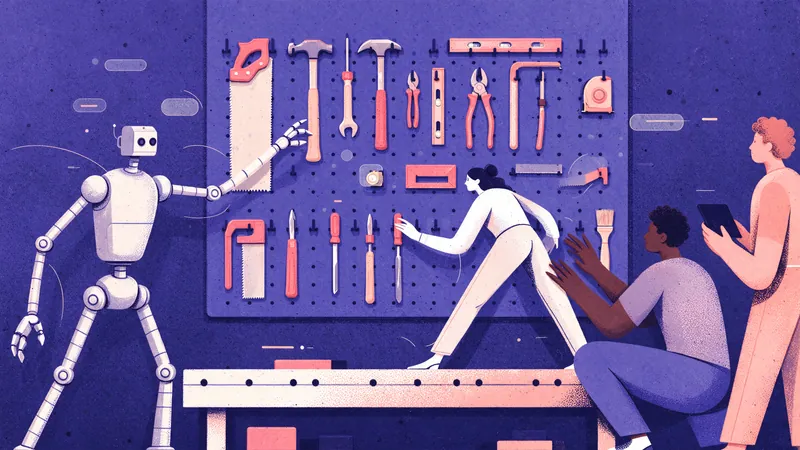
A split workbench: on the left, a printed tool schema with one field circled and an arrow showing it renamed; on the right.
Key points

Key points

  1. 1Anchor the contract to the tool schema your code sends to the model, not to whatever the model replies with.
  2. 2Snapshot the tool definition and assert that field names, JSON types, enum values and the required list stay compatible for every field your code reads.
  3. 3Run those assertions in CI on every change, then make one live call per tool with a canonical input once per pipeline.
  4. 4Treat a live call as a metered request: budget a small fixed number of them, log the usage fields, and fail loudly when the contract moves.

Why the boundary that breaks is the schema you send

Contract testing exists because interfaces break silently. A provider renames user_name to username, the spec is not updated, unit tests pass, and a consumer starts throwing parse errors in production; the totalshiftleft guide on API contract testing calls this the moment you notice "the interface broke silently because nothing was watching the boundary" the totalshiftleft guide on API contract testing. The same failure mode applies when the "provider" is a model vendor and the "consumer" is your agent: the vendor ships a tool definition with a renamed argument, or a new required property, and nothing in your test suite notices because your tests mock the model.

Most teams test the wrong side. They capture a model reply as a fixture, replay it, and call it an agent test. That catches prompt regressions but cannot catch schema drift, because a recorded reply is a frozen artifact that no longer tracks what the provider actually sends. Tool function mocking is useful for testing agent reasoning, but the langwatch testing guide is explicit that this level does not test the tool implementation or the external interface the langwatch testing guide on mocking. The schema is the external interface, so it needs its own contract.

The distinction that matters is between a schema test and a contract test. A schema test checks that one system is compatible with a schema at a point in time; a contract test checks that two systems can still communicate the Pactflow explainer on schema testing and contract testing. Your tool definition is the contract. It is the artifact the model reads, and the only thing you can hold it to.

The four ways a field drifts

Not every change to a tool schema is dangerous. Some are safe expansions that your code should tolerate, and some will break parsing or routing the first time the model exercises the new shape. Postel's law applies: be liberal in what you accept, conservative in what you send the Pact documentation on writing consumer tests. The trick is knowing which changes fall on which side of that line.

Drift typeWhat the provider doesEffect on your codeBreak risk
Renameorder_id becomes orderIdKeyError or None when you read the argumentBreaks
Type changeinteger becomes string, boolean becomes stringValidation errors, silent coercion, bad downstream queriesBreaks
Enum narrowing["low","normal","high"] loses "normal"The model picks another value or your mapping missesBreaks
Enum wideninga new value appearsOnly breaks if your code has an exhaustive branchUsually safe
New required propertycurrency added to requiredModel omits it or guesses; your validator rejects the callBreaks
New optional propertynote added to propertiesNone, if you ignore unknown keysSafe
Description-only editthe text the model reads changesBehavior may shift without any structural changeUnknown

Two rows deserve a warning. Enum narrowing is the sneakiest, because a missing value can make a model pick the nearest legal option and produce plausible but wrong argument values, and nothing in your logs says "the enum changed." Description edits are invisible to structural assertions; a rewritten description can move tool selection quality without touching a single type, so snapshot descriptions and review diffs rather than asserting byte equality the Pact documentation on writing consumer tests.

Snapshot the schema you send, not the one you read

The contract file should be generated from the exact object your code hands to the model vendor, not from a separate document someone maintains by hand. This is the branch by abstraction idea applied to model providers: put an abstraction in front of the provider so the rest of the system deals with a stable interface, and change one implementation at a time Martin Fowler's description of branch by abstraction. Your abstraction is a single module that builds tool definitions, so the snapshot has one source.

A minimal pattern: a function that returns the tool definitions, a JSON snapshot committed to the repo, and a test that compares the live definition against the snapshot.

# tools/definitions.py
def build_tools():
    return [{
        "type": "function",
        "function": {
            "name": "get_order",
            "description": "Fetch one order by its identifier.",
            "parameters": {
                "type": "object",
                "properties": {
                    "order_id": {"type": "string"},
                    "currency": {"type": "string", "enum": ["USD", "EUR", "GBP"]},
                },
                "required": ["order_id"],
            },
        },
    }]

The comparison test uses the plain assert style that pytest rewrites for readable failure output the pytest API reference. Keep the assertion set narrow: only fields your code actually reads. The Pact guidance is that you should only assert on things whose change would affect the consumer, so the provider can evolve without false alarms the Pact documentation on writing consumer tests.

from tools.definitions import build_tools

READ_FIELDS = {"get_order": {"order_id": "string", "currency": "string"}}
REQUIRED_ENUMS = {"get_order": {"currency": {"USD", "EUR", "GBP"}}}

def test_no_rename_or_type_change():
    for tool in build_tools():
        name = tool["function"]["name"]
        props = tool["function"]["parameters"]["properties"]
        for field, expected in READ_FIELDS[name].items():
            assert field in props, f"{name}.{field} disappeared"
            assert props[field]["type"] == expected, f"{name}.{field} type moved"

def test_enums_still_cover_our_mapping():
    for tool in build_tools():
        name = tool["function"]["name"]
        props = tool["function"]["parameters"]["properties"]
        for field, needed in REQUIRED_ENUMS[name].items():
            assert needed <= set(props[field]["enum"]), f"{name}.{field} enum narrowed"

def test_no_new_required_property():
    for tool in build_tools():
        params = tool["function"]["parameters"]
        assert set(params.get("required", [])) <= {"order_id", "currency"}, \
            f"{params['required']} added a required argument"

Run this in CI on every commit; it is pure JSON comparison, milliseconds per test, and needs no network. The contract-testing literature is consistent on the economics: because contract tests only touch the interface, they are fast, deterministic and trivially parallel the totalshiftleft guide on API contract testing.

What the assertions cannot see

A structural contract is blind to three things, and a good test suite names them so nobody assumes coverage it does not have.

First, it cannot see behavior. Whether the model actually calls get_order with a sensible order_id is a functional question, not a contract question; Pact's own docs draw this line sharply, noting that contract tests should not be aimed at exposing bugs in the provider the Pact documentation on writing consumer tests. Keep a separate evaluation suite for tool-selection quality.

Second, it cannot see semantics. A status field that changes from "shipped" to "in_transit" while both remain legal strings passes every structural check a discussion on detecting API contract drift. If your prompts depend on the meaning of a value, add an explicit allowlist assertion on the values you map, separate from the type check.

Third, it cannot see environment-specific differences. Vendors occasionally expose slightly different tool catalogs across endpoints or regions. The contract discussion on drift notes that response shape can change "only in specific environments" a discussion on detecting API contract drift. Run the snapshot test against the exact endpoint you deploy to, and record which environment produced the snapshot.

One more structural check is worth adding: tool count. If a provider splits get_order into two tools, a per-tool assertion loop still passes for the missing name only if the name itself is gone, but a model that once had one option now has two and selection behavior changes. Assert the set of tool names, not just their contents.

Spec-driven tooling gets you charted, executable contracts from a specification. Specmatic runs an OpenAPI document as a contract test against a live service and reports pass counts per endpoint the Specmatic contract testing documentation, and the Microcks approach treats the spec as the source of truth for both mocks and tests the Microcks and Pact comparison. The equivalent for tools is to keep a JSON Schema file for each tool's parameters object and validate your builder output against it, which also gives you a shareable artifact for prompt and description review.

The live call: one per tool, once per pipeline

Snapshots prove your code is stable. They do not prove the vendor's live behavior. Once per pipeline (not per commit, not per test case), make a single live call per tool with a canonical input and verify the argument names and types that come back. This is the consumer-driven half: the recorded expectation is yours, the verification runs against the real provider the PactFlow guide to user-driven contract workflow.

A worked example with numbers. Suppose you have 6 tools, a CI pipeline that runs 60 times a day, and one live call per tool per pipeline. That is 360 metered requests a day just for contract verification. If each verification request carries roughly 1,200 input tokens (schema plus a short prompt) and about 80 output tokens (one tool call), you are paying for roughly 430,000 input tokens and 29,000 output tokens daily. Multiply by your vendor's per-token rate and you have the exact cost of the safety net. The token budget guidance is to log prompt tokens, completion tokens, model, feature and estimated cost for every request so this number stays visible rather than surprising the Yotta Labs guide to token budgets.

Three rules keep live calls cheap and meaningful:

  1. Set tool_choice to force the specific tool, so the test measures argument shape rather than selection quality.
  2. Use a deterministic canonical input (a fixed order ID, fixed currency) so failures are attributable to the contract, not to sampling.
  3. Fail the pipeline on mismatch, but call a separate alert channel so a vendor change does not block unrelated merges; run the check on a schedule if your pipeline volume is high.

If you use one API surface for several model families, the router is also the natural place to centralize the snapshot and the verifier, so each vendor's tools get the same assertion set. Quanta Inference exposes text, image, video, audio and embedding models behind one OpenAI-compatible key, which means one contract harness can cover every model you route to (https://quantaintelligence.ai/inference).

Wire it into CI and review the diffs

The order of operations matters. Structural assertions first, because they are free and catch your own regressions. Then a schema-validation pass against the committed JSON Schema. Then the single live call. Then, only on failure, a recorded diff artifact attached to the build.

Pact-style tooling adds a deployment gate on top: the broker answers whether a version is safe to deploy given verification results the PactFlow guide to user-driven contract workflow. You can approximate this without a broker: a small JSON file mapping tool name to last verified provider version, checked at release time. If the provider moved since the last verification, the release waits for one live call. Feature-flagged rollout patterns apply here too, since they let you ship the new prompt or tool wiring behind a switch and roll back without redeploying the Harness guide to feature flags.

Review discipline is the part teams skip. A schema diff that only adds an optional property should be merged without ceremony. A diff that touches required, an enum, or a type needs a named reviewer who owns the tool. Swagger and OpenAPI validation tooling will flag required fields, types, enums and unexpected fields automatically a discussion on detecting API contract drift, and you can port the same checklist onto your tool snapshot. The test that fails on a new required property is the highest-value single assertion in the file: it catches the change that would otherwise surface as a production validation error.

For code-generation approaches, generate the schema from typed code and diff it against the approved schema, failing the build when the full schema does not match the Pactflow guide to schema-based contract testing. Typed tool builders in TypeScript, Pydantic models in Python, or Go structs all give you this for free.

FAQ

FAQ

Should I test against the model's reply or the schema I send?

Test against the schema you send. A recorded reply is a frozen artifact that no longer tracks the provider, while the schema you send is the artifact the model actually reads and the only thing your assertions can hold stable. Keep reply-based fixtures for prompt regression tests and treat them as a separate suite.

How do I catch an enum narrowing when the old value is still legal to send?

Assert that the enum values your code maps are still present as a set, not that the whole enum is unchanged. Your mapping is exhaustive either way; what you need to know is whether the value your code depends on disappeared, which is exactly what a subset assertion detects.

How often should the live call run?

Once per pipeline, or on a schedule if your commit volume is high, and always one call per tool with a forced tool_choice. Structural assertions run on every commit because they are free, and the live call is reserved for proving the vendor's current behavior matches your snapshot.

What do I do when a vendor adds a required property?

Fail the build, then decide within the same change: supply a default, extend your validator, or pin the old tool definition. Do not silence the assertion. A new required property means the model may omit or guess the value, which surfaces as a runtime validation error in your tool executor.

Where do experts fit when the contract breaks repeatedly?

When drift keeps hitting the same line of business, the fix is usually a maintained, reviewed tool definition set plus an owner for each tool. Quanta Experts read your context, do the work and hand back finished deliverables, which is a reasonable way to staff that ownership without growing headcount for a part-time job (https://quantaintelligence.ai/agents).

Sources

Sources

  1. API Contract Testing: What It Is, How It Works and Tools
  2. Mocking External APIs in Agent Tests, Scenario
  3. Contract Testing vs. Schema Testing | Pactflow
  4. Writing Consumer tests
  5. Make Large Scale Changes Incrementally with Branch By ...
  6. API Reference - pytest documentation
  7. How do you detect API contract drift before it breaks ...
  8. Contract Testing
  9. Microcks and Pact for API contract testing
  10. Pact vs Spring Cloud Contract testing 2026
  11. Set Token Budgets for an AI Product
  12. How to Branch by Abstraction with Feature Flags
  13. Schema-based contract testing with JSON ... - Pact Flow
About the author

About the author

Antonio Evans
Antonio Evans

Antonio Evans is the founder of Quanta Intelligence and a fractional CTO who builds HIPAA-ready AI systems for health and life-science companies. Before that he was technical co-founder of FriendsEAT for twenty years, CEO of Socialdraft, and a data engineer at IBM. Antonio lives with his dog Santino in Lisbon, Portugal.

All articles