Business

How to Vet an AI Vendor's Support and Escalation Terms

Antonio Evans10 min read

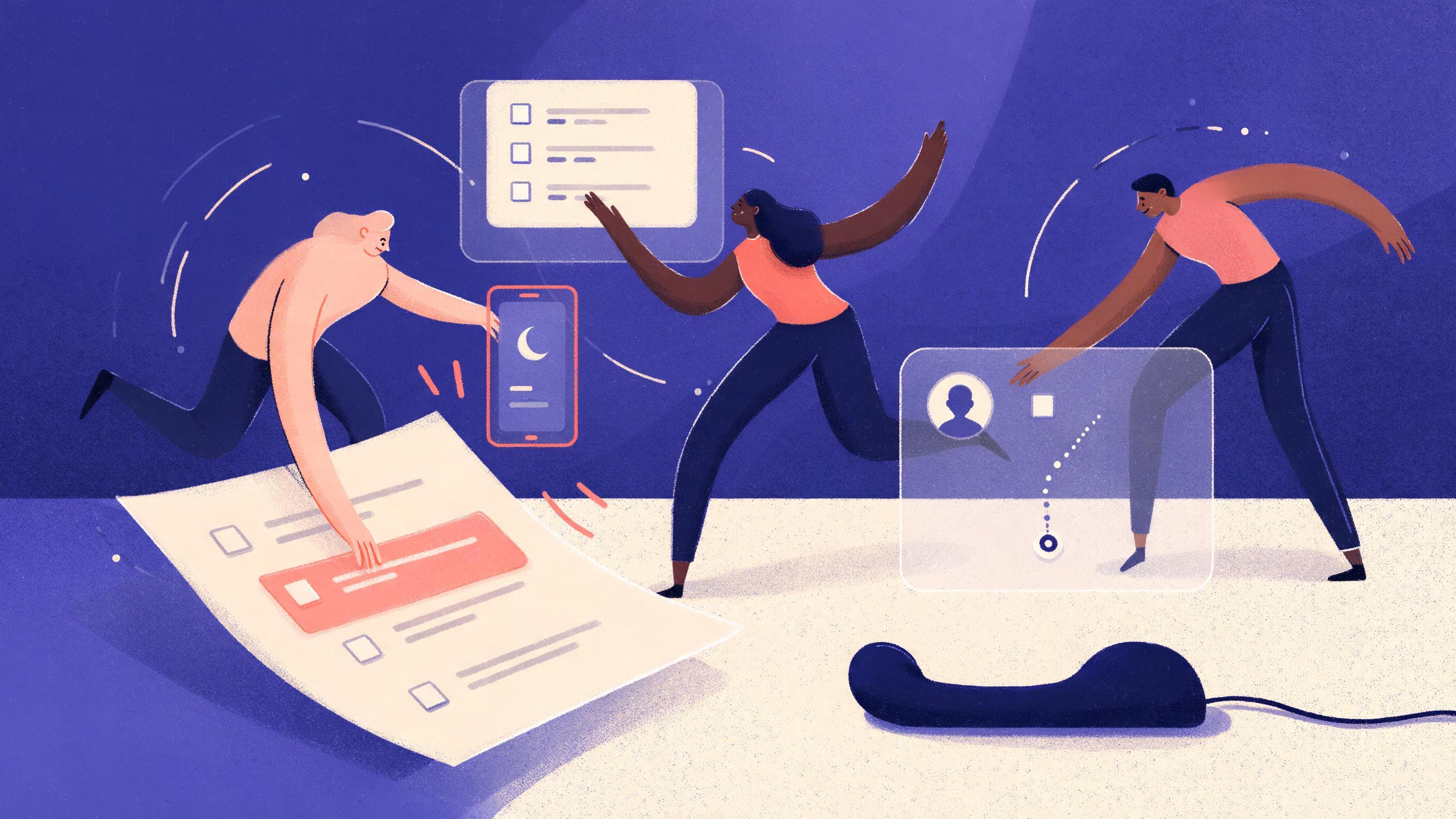
A contract page on a desk with a highlighted clause about response times, a phone showing 2:00 AM, and a checklist with boxes for named owner, severity levels, and escalation path.
Key points

Key points

  1. 1Get response time commitments written per severity level, not a single "we respond fast" sentence in a sales deck.
  2. 2Name the person or team who owns a bad AI answer at 2am, and confirm the hours they are actually staffed.
  3. 3Define escalation triggers that move an issue from support to engineering or management, with times attached.
  4. 4Test the support channel before you sign by filing a real problem and timing the answer against the promised clock.

Start with the failure mode, not the feature list

Most AI vendor evaluations spend their energy on the demo. The output looks good, the integration looks easy, and the support terms get skimmed at the end of the contract because they feel like boilerplate. That is the wrong order. The question that decides whether a purchase is workable is not what the tool does on a good day, it is who is accountable on a bad one.

The build versus buy literature is blunt about this. HatchWorks argues that the failure mode is not picking the wrong tool, it is picking something the organization cannot operate, and that buyers should decide what must be owned versus orchestrated before they scan the market at all the build vs buy framework. A support contract is the part of "buy" that transfers operational risk back to the vendor. If it is vague, you bought the tool and kept the risk.

A useful reframe: you are not buying response time. You are buying a decision right. When an AI system produces a wrong, harmful or out-of-policy output, someone has to decide whether to roll back the model, disable an agent, notify customers, or change a prompt. The support contract should say who makes that call, how fast, and what evidence you get afterward. KPMG's survey work notes that risk management and control sit among the core forces in the buy decision, which makes control a contract term rather than a feature toggle the KPMG analysis.

Ask for response times by severity level

"24/7 support" is not a commitment. It is an availability statement. The commitment you want is a table with severity levels on one axis and clock times on the other, incorporated into the master agreement rather than a proposal appendix.

The security industry has negotiated these tables for years and the vocabulary transfers. The Adaptive Security guide to threat protection SLAs lists six elements every agreement should define before signing: scope, measurement period, exclusions, remedies, customer obligations, and the service itself the SLA evaluation guide. Swap "threat scope" for "AI incident scope" and the list survives almost intact. The UnderDefense analysis of AI security operations adds the sharpest distinction, warning that vendors who report acknowledgement time as response time hide the gap between "we saw it" and "we stopped it" the AI SOC SLA guide.

Here is a framework you can adapt. It is written around AI failure modes rather than generic outages.

SeverityDefinition for an AI systemResponse target (example)Owner named in contract
Sev 1Harmful output reaching customers, an agent taking an unauthorized action, or a data exposureAcknowledgement in 30 minutes, containment plan in 2 hours, 24/7Named on-call engineer plus named support manager
Sev 2Materially wrong outputs in a critical workflow, no customer harm yetAcknowledgement in 2 business hours, workaround in 1 business dayNamed support lead, engineering on request
Sev 3Degraded quality, intermittent errors, eval scores driftingAcknowledgement in 1 business day, resolution target 5 daysSupport queue with named team lead
Sev 4Cosmetic issues, documentation errors, feature requestsAcknowledgement in 2 business days, no resolution commitmentSupport queue

The numbers are illustrative. The structure is the point: definition, acknowledgement clock, containment or resolution clock, and a named owner per row. Ask the vendor to fill in their own figures, then check them against the public status page.

Two clauses decide whether the table is real. First, does the clock stop when the vendor asks you a question? If yes, a vendor can pause indefinitely by requesting logs. Cap it: one pause, no more than four hours, only after acknowledgement. Second, what is the remedy? Service credits are standard, and the Adaptive guide notes they typically do not cover downstream losses the SLA evaluation guide. Assume a credit worth a fraction of the monthly fee will not cover a bad customer-facing answer.

Find out who owns the bad answer at 2am

This is the most diagnostic question in the evaluation. Ask it in exactly those words: "If your model produces a harmful answer at 2am on a Saturday, who is the named person or team that owns fixing it, and what are their hours?"

You will get one of four answers.

  1. "Our support team, 24/7." Incomplete. Ask whether that team can change model configuration, disable an agent, or roll back a prompt version without waking an engineer. If not, they own the ticket, not the fix.
  2. "Your account manager coordinates." Nobody is on call. Escalation depends on goodwill and a mobile phone.
  3. "We follow the sun across three regions." Plausible, but check the handoff. Cross-region support loses context, and a 2am incident can spend hours being re-explained.
  4. "Engineering is paged automatically." Best case. Ask what triggers the page, what the rotation looks like, and whether the mechanism appears in the contract or only in conversation.

Sirion's vendor checklist, written for a different category, lists exactly the questions worth asking here: whether support levels are tied to the purchased package, whether enterprise customers get dedicated contacts, whether there is a documented escalation path for unresolved incidents, and what remedies apply the vendor SLA checklist. They also advise requesting the actual service-level schedule rather than trusting marketing claims, which is the most practical instruction in that piece.

A second ownership question gets skipped: who owns the fix after the incident closes? An AI incident has two halves, immediate remediation (suppress the answer, correct the record, notify the customer) and root cause (why the retrieval pulled the wrong document, why the guardrail did not fire). Ask who writes the root cause analysis, in what format, and within how many business days. Ask whether it is contractual or best practice.

For regulated buyers, add a third: who signs the notification to your regulator or your customers? The HP framework treats real-time alerts with detailed forensics as the gold standard rather than a 24-hour notification window the HP build vs buy framework. If your regulatory clock starts when you become aware, the vendor's lag is your exposure.

Trace the escalation path and write down the triggers

An escalation path that only appears in a slide is not a path. You want a written chain with triggers, owners and times, attached as a schedule.

  • Tier 1 support receives the ticket through the contracted channel and classifies severity against agreed definitions. First response per the table.
  • Tier 2 technical support takes over when the issue misses the tier 1 target, or when it is classified Sev 1 or Sev 2 at intake. Named individual, named backup.
  • Engineering escalation fires automatically when a Sev 1 misses its containment target, or when the ticket involves model behavior rather than configuration.
  • Management escalation fires on a second missed target or any Sev 1 involving customer harm. Name the job title, not "management": head of support, head of engineering, and the executive sponsor in your contract.
  • Your side has a counterpart at each tier, with a named backup and documented authority to pause the deployment.

Two things make this real. The triggers must be automatic rather than on request, because you are the party most motivated to escalate and you should not have to ask. And escalation must not be a reward for being loud. If your account is small, a contractual trigger is the only thing that puts you on the same terms as the largest customer.

The UnderDefense framework lists "escalation gates" among its core pillars alongside detection speed, containment time, uptime and penalty structures the AI SOC SLA guide. That framing is useful: a gate is a checkpoint that must be passed, not a favor.

Sev 1 opened --> Tier 1 ack within 30 min
              --> Tier 2 named engineer engaged within 1 hour
              --> Containment (agent disabled / output suppressed) within 2 hours
              --> If not contained at 2 hours: engineering head paged, automatically
              --> If customer harm occurred: your contact and vendor exec sponsor
                  notified within 4 hours, written RCA within 5 business days

Adapt the numbers, keep the shape. A path with no times is a phone tree.

Decide whether support belongs in the buy at all

Support terms are also a build versus buy signal. If your use case is core to revenue and a bad output is a board-level event, a capped support contract may not transfer enough risk.

The literature gives a decision rule rather than a slogan. HatchWorks recommends buying when you are paying for decades of edge cases, audits, workflows, uptime expectations and support, and building when the capability is your advantage the build vs buy framework. Read that as: support quality is part of what you pay for when you buy. If support is thin, you are paying a license fee for a problem you still own.

Cost matters too. License fees typically represent only 20 to 40 percent of true AI implementation costs, with the rest in integration, training, change management, ongoing operations and exit, according to Pertama Partners the AI TCO guide. Zylo makes a related point, that total cost of ownership typically runs two to three times higher than licensing for a purchased solution the SaaS build vs buy analysis. Support sits inside that multiplier, and it scales with your incident rate rather than your seat count.

There is also a liability argument. Vendor contracts cap what they owe you, usually at a fraction of what one bad output costs, which is why the analyst writing on AI agent liability recommends classifying systems by exposure before negotiating carve-outs the AI agent liability analysis. Support terms and liability caps are the same negotiation. A vendor that will not commit to a two-hour containment window for a customer-facing agent is telling you how they priced that risk.

If you conclude you need a support relationship beyond a ticket queue, that is the moment to get help rather than redline alone. A free 30-minute scoping call is often enough to decide: Quanta Consulting.

Test the support before you sign

The most reliable predictor of support quality is a live test, run during evaluation rather than after.

  1. Use the contracted channel only. Not your sales contact's mobile number. The form, portal or email that will appear in the contract.
  2. File a real problem. Something from your pilot: a wrong answer in your test set, a failed integration, stale data.
  3. Record four timestamps. Submission, first human reply, first useful reply, resolution. Note whether the reply was human or an autoresponder.
  4. Ask an escalation question inside the ticket, such as "who is the on-call engineer and when do they start?" The answer tells you whether the path exists.
  5. Repeat out of hours. One weekday afternoon, one weekend. Compare.

Score against the promised table. If the vendor promised a 30-minute acknowledgement for Sev 1 and the first human reply came in four hours, you have evidence, and evidence changes contract language.

Apply the same skepticism to the status page. A page that has never shown a partial outage is either a very reliable system or a page updated by marketing. Ask who updates it, how fast after detection, and whether subscribers are notified automatically. Then ask two reference customers one question: "Tell me about the last Sev 1 and how the escalation went." The story is hard to script, and the details are what you are buying.

What to put in writing before you sign

The contract schedule is where this work becomes enforceable. Aim for one or two pages with these sections. If a vendor calls a term non-standard, that is information, not a dead end.

  • Severity definitions written for AI failure modes, with examples from your own use case.
  • A response and containment table with acknowledgement, containment and resolution clocks per severity, in wall clock hours, with the timezone stated.
  • Named owners per severity, by role and by name, with a backup and a documented on-call arrangement for Sev 1.
  • Escalation triggers that fire automatically, with job titles on both sides at each tier.
  • The contracted channel, so a portal outage does not pause the clock.
  • Clock-pause rules, capped and one-time.
  • Root cause commitments: format, owner and delivery window for Sev 1 and Sev 2.
  • Notification obligations aligned to your regulatory clock, in hours from detection.
  • Remedies for missed targets, plus what they do not cover.
  • A change notification clause covering model, prompt or configuration changes that could alter outputs, with an opt-out or pinning option.
  • An exit clause with data export format and a support window during migration. Exit costs are rarely considered, and the Pertama work lists them among five clusters of hidden cost the AI TCO guide.

A checklist, in negotiation order:

ItemMust haveNice to have
Severity table with AI-specific definitionsYesExamples per row
Containment clock separate from acknowledgementYesAutomatic rollback
Named on-call owner for Sev 1YesPublished rotation
Automatic escalation triggersYesJoint escalation bridge
RCA for Sev 1 and Sev 2YesPublic post-incident summary
Model change notificationYesOpt-out or pinning
Exit support and data exportYesMigration assistance hours

One final scoping point. If the AI feature is embedded in a larger platform, check whether the schedule covers the AI component or only "the platform." AI incidents fall between teams: the platform desk blames the model, the model provider blames the integration, and your ticket bounces. Name the AI component explicitly and name the single owner for issues that touch it.

If your deployment spans several model providers, that fragmentation compounds, since each has its own escalation path. Routing text, image, video, audio and embedding models through one API key and one OpenAI-compatible interface removes support relationships you would otherwise have to police: Quanta Inference.

FAQ

FAQ

What is the single most useful question to ask about AI vendor support?

Ask who the named person or team is that owns fixing a harmful output at 2am, and what their staffed hours are. It moves the vendor from availability language to an accountable owner. If they cannot name a role, the on-call arrangement does not exist.

Is a 24/7 support promise enough?

No. Availability is not a commitment. You need per-severity acknowledgement and containment times in wall clock hours, plus a remedy for misses. The SLA literature treats separating acknowledgement from resolution as basic, because a fast reply can mask a slow fix the AI SOC SLA guide.

How do I test support before signing?

File a real problem through the exact channel that will appear in the contract, at an awkward hour, and log submission, first human reply, first useful reply and resolution. Do it twice and compare against the promised table. Treat any gap as negotiating evidence.

What should the escalation path contain?

Automatic triggers rather than on-request escalation, a named role and backup at each tier on both sides, times attached to each gate, and a defined point where engineering then management are paged. Put it in the contract schedule, not a slide.

Does support quality change the build versus buy decision?

It can. If support terms do not transfer enough operational risk, you still carry incident response and the buy is a license plus a problem. Buyers who reach that conclusion usually need a different class of contract or a hybrid model, worth taking to a scoping conversation rather than settling inside a redline.

Sources

Sources

  1. The Build vs Buy Framework in the Age of AI - HatchWorks AI
  2. The Evolution of Build Vs Buy | KPMG UK
  3. Email Advanced Threat Protection SLA: Metrics, Detection ...
  4. AI SOC SLA in 2026: MTTR, Benchmarks, Clause Tables ...
  5. Top Contract Management Vendors for Uptime SLAs and ...
  6. Enterprise AI Services: Build vs. Buy Decision Framework - HP
  7. AI Total Cost of Ownership (TCO) Guide | Calculate True AI…
  8. Build vs Buy: What's the Right Choice for Your SaaS Management Tool?
  9. Who Pays When an AI Agent Gets It Wrong
About the author

About the author

Antonio Evans
Antonio Evans

Antonio Evans is the founder of Quanta Intelligence and a fractional CTO who builds HIPAA-ready AI systems for health and life-science companies. Before that he was technical co-founder of FriendsEAT for twenty years, CEO of Socialdraft, and a data engineer at IBM. Antonio lives with his dog Santino in Lisbon, Portugal.

All articles