Business

How to Write a Data Processing Addendum for AI Tools

Antonio Evans11 min read

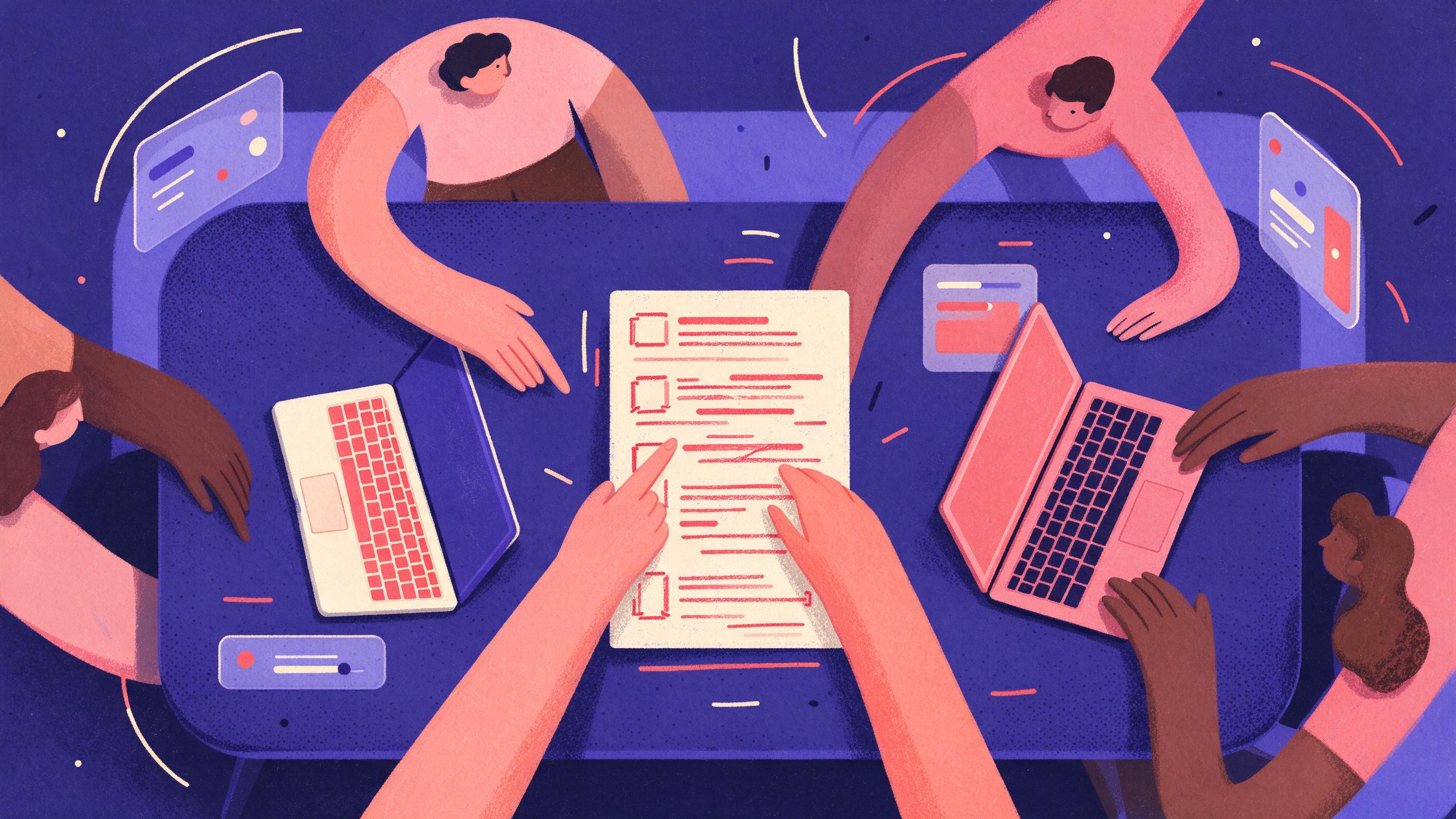
A top-down view of a conference table with two open laptops and a printed vendor DPA covered in redline marks.
Key points

Key points

  1. 1A data processing addendum for an AI tool turns questionnaire answers into enforceable terms, with numbers and named contacts.
  2. 2The five clauses that matter most are processing purpose and data categories, subprocessor approval, breach notice deadlines in hours, audit rights satisfied by a SOC 2 Type II report, and deletion with a written certificate.
  3. 3Prompts, outputs, embeddings and metadata are separate data categories and must be listed explicitly, because vendors treat them differently from stored files.
  4. 4Vague words like "promptly" and "reasonable" are where disputes live, so replace them with hours, report names and delivery dates.

Start with a data map, not a template

A DPA borrowed from a SaaS vendor will miss the parts of an AI tool that make it different. Standard software stores what you give it. An AI tool can take a prompt, send it to a model, return an output, write a log entry, and sometimes keep vector embeddings of your documents so future queries return the right passage. Each of those is a processing activity with its own retention rule.

So before you mark up a single clause, write down four columns: what data goes in, where it goes, how long it stays, and what purpose it serves. The vendor questionnaire is where you gather this. A good questionnaire asks about encryption in transit and at rest, where data is stored, who has access, whether the vendor uses your data to improve its models, and what the retention and deletion timeline is, including backups and deletion attestations (the AI vendor questionnaire guide). The DPA is where those answers become binding.

The reason this matters in practice: sensitive data flows into AI tools constantly, and often through personal accounts rather than corporate ones. One analysis of enterprise AI usage found 32.3 percent of ChatGPT usage happens through personal accounts, 24.9 percent for Gemini, 58.2 percent for Claude and 60.9 percent for Perplexity, and that 39.7 percent of all AI interactions involve sensitive data (Cyberhaven). A DPA only covers the corporate account. That is exactly why the data map needs to say which account and which tenant the contract governs.

A useful habit: make the vendor's data flow diagram an annex to the DPA. If the diagram changes, the contract has changed, and you get a notice right rather than finding out during an incident.


Clause 1: Purpose and data categories, including prompts and outputs

This is the clause most templates get wrong, because they describe data categories in the language of a file store. For an AI tool, be explicit. A working list:

CategoryExamplesWhy it needs its own line
Input promptsCustomer text, pasted documents, chat messagesMay be retained for abuse monitoring even when training is off
OutputsGenerated text, code, images, summariesOwnership and downstream reuse rights differ from inputs
Uploaded filesPDFs, spreadsheets, audio recordingsOften the largest volume of personal data
Embeddings and index dataVector representations of documentsRarely deleted when the source file is
Telemetry and logsAPI key, timestamp, token counts, model usedSurvives content opt-out and can re-identify in combination
Derived or de-identified dataAggregate usage statisticsThe carve-out that quietly undoes your no-training clause

Two vendor commitments belong in this clause, in plain words. First, a no-training term with no ambiguity: your content is processed to deliver the service and never fed into training, fine-tuning, evaluation or benchmarking. Any vendor can say it, which is why reviewers now look at the parts you can check, like named subprocessors, retention quoted in days, and a closed anonymized-data carve-out (Parseur). Second, a purpose limitation: process the data only to provide the service, with any other use requiring written instruction from you.

The anonymized-data carve-out is the one to watch. A clause that lets the vendor create "aggregated and de-identified data" for product improvement can convert your data into something outside the deletion promise, which is what some vendor templates do (Day AI DPA). Either delete the carve-out or add a standard: de-identification must follow a named method, must not permit re-identification by the vendor or its subprocessors, and the vendor must not sell or share it.

On training, get the vendor to state its default in the DPA itself rather than referencing a marketing page. OpenAI's enterprise terms say it does not train on business data by default and that customers own inputs and outputs where allowed by law, and it offers a DPA for Business, Enterprise and API customers (OpenAI enterprise privacy). That is a good model for the language. It is not a substitute for reading your own vendor's DPA.

One more test worth running: ask what happens with retention after opt-out. Opting out of training does not mean zero retention. Standard opt-out prevents training use but does not eliminate safety monitoring logs, which persist for up to 30 days, and zero data retention is a separate configuration from a no-training promise (Secure Privacy). So write both numbers into the DPA: a no-training commitment and a retention period in days, per category, with a separate number for abuse monitoring logs and backups.

Clause 2: Subprocessor approval and notice

An AI vendor usually has more subprocessors than a normal SaaS vendor: a cloud host, a model provider, a speech-to-text service, a vector database, a content moderation API. Each one expands the blast radius without appearing on your vendor's invoice.

The DPA should do three things. It should attach a named subprocessor list as a schedule, with the processing each one performs and its location. It should require prior written notice, not less than 30 days, before any new subprocessor is added, with a right to object on reasonable data protection grounds. And it should require flow-down: every subprocessor is bound by terms no less protective than the DPA.

This is a live gap, not a theoretical one. Research on business software providers found that 63.6 percent of vendors advertising AI capabilities do not disclose a third-party AI subprocessor anywhere in their legal documentation (Parseur, citing DataGrail). If your vendor is in that group, the list is the first redline you send.

Check how the vendor defines affiliates, too. GitHub's Copilot FAQ separates affiliates (its corporate family) from service providers and subprocessors, and says subprocessors may only process data on GitHub's behalf and at its direction (GitHub community). That distinction is worth copying: an affiliate should not be able to use your data for its own products just because it shares a parent company.

A practical objection procedure: you have 30 days to object in writing, the parties discuss in good faith for 15 days, and if no resolution, you may terminate the affected service and receive a pro rata refund. Without that last step, an objection right is decorative.

Clause 3: Breach notice in hours, not days

GDPR Article 33 requires the controller to notify the supervisory authority without undue delay and where feasible within 72 hours of becoming aware of a breach, and requires the processor to notify the controller without undue delay after becoming aware (GDPR Article 33). "Without undue delay" is the processor's obligation, and it is a poor basis for planning. You cannot start your 72-hour clock if you learn about the incident on day three.

So put hours in the contract. A workable structure:

PhaseDeadlineContent
Initial notice24 hours from confirmationNature of incident, data categories affected, likely volume, containment steps taken
Written update72 hoursKnown facts, affected systems, whether personal data is involved
Status updatesEvery 48 hours until closedInvestigation progress, remediation plan
Final report30 days after closureRoot cause, full scope, remediation evidence

For higher-risk data such as health or financial records, tighten the initial notice to 12 hours. Some practitioners in healthcare recommend breach terms with deadlines of 24 to 72 hours as a floor, alongside a signed business associate agreement, a written no-training term, a current SOC 2 Type II report and a subprocessor list (Censinet).

Two extras are worth the ink. First, name the contacts: a security contact, a privacy contact and a legal escalation contact with email and phone, plus a 24/7 line. Second, allocate cost. State that the vendor bears reasonable costs of forensic investigation, notification and credit monitoring where the incident arises from its acts or omissions, subject to a cap you negotiate separately from the general liability cap. A vendor's standard DPA will often promise notice and assistance but stay silent on who pays. OpenAI's DPA, for example, commits to notifying the customer without undue delay after becoming aware of a personal data breach and to providing reasonable assistance, without a fixed hour count (OpenAI DPA). That is normal and it is exactly what you are redlining.

Clause 4: Audit rights you can actually exercise

Most vendor templates grant an audit right on paper and then require 60 days' notice, restrict it to once per year, limit it to business hours at the vendor's office, and require you to pay the vendor's costs. That is not an audit right. It is a permission slip.

Redraft it around evidence you will actually use. Google's Cloud DPA takes this approach, defining which services are in scope for a certification or report and tying compliance obligations to that published list (Google Cloud DPA). OpenAI's DPA similarly limits the compliance evidence obligation to a reasonable written request, no more than once per year, and to the extent required by data protection law (OpenAI DPA). Use those structures as the benchmark.

Your clause should accept, as full satisfaction of the audit right: a current SOC 2 Type II report, its bridge letter covering any gap period, a summary of the most recent penetration test with findings and remediation status, and responses to a standardized security questionnaire. Ask for the report scope, not just the badge. A SOC 2 report with a narrow system description covering only the marketing site tells you nothing about the inference pipeline.

Then keep a real audit as a backstop for cause: after a confirmed breach, after two missed report deliveries, or on a regulator's written request. That triggers a shorter notice period (10 business days), allows a third-party auditor bound by confidentiality, and puts the cost on the vendor when the audit finds a material control failure.

The evidence map is the artifact that makes this work in a risk committee. Build it once, reuse it for every vendor.

What you need to verifyEvidence to requestWhat it proves
Security programSOC 2 Type II, current periodControls operated over time, not just designed
Boundary of that programSystem description and in-scope servicesWhether the AI pipeline is covered
Resilience to attackPen test summary and remediation datesKnown weaknesses were fixed
Access controlMFA enforcement for admins and supportWho can reach your data
TraceabilityAudit logs of access, export and admin actionsYou can reconstruct an incident
Fourth-party exposureNamed subprocessor listWho else touches the data

That table mirrors the evidence requests that procurement and security teams now standardize on, including SOC 2 Type II or ISO 27001, pen test summaries and remediation processes, breach notification timelines with hours and days in the contract, and named subprocessors with data location (CTO Input).

Clause 5: Return, deletion and the certificate

Deletion is the clause where AI tools diverge most from SaaS. Deleting a document does not necessarily delete the embeddings derived from it, the fine-tuned adapter trained on it, the cached prompt, or the copy in an evaluation set. Write the clause to cover each.

The clause should require, within 30 days of termination or written request: return of customer data in a structured, commonly used format, deletion of all customer data including prompts, outputs, embeddings, indexes, caches and backups, and written certification of deletion signed by an authorized officer. Backups can carry a longer outer limit, commonly 90 days, provided they are isolated and not restored except for disaster recovery.

The certificate should state more than "data deleted." Ask for: the categories deleted, the systems and environments covered (production, staging, disaster recovery, analytics warehouse), the date of deletion, the method (cryptographic erasure counts), confirmation that subprocessors were instructed and confirmed, and any residual copies with the legal basis for keeping them.

Two exceptions to name in advance so nobody argues later. First, legally required retention, such as records you must keep for tax or regulatory reasons, with the legal basis and retention period stated. Second, safety and abuse-monitoring logs, which commonly persist for a defined window even under no-training terms. If the vendor's standard position is a 30-day abuse-monitoring retention window that survives opt-out, get that number written down rather than discovering it in an incident review (Secure Privacy).

A worked example shows why the certificate matters. Say you run a support tool that ingests 40,000 tickets a quarter, each with an average of two attachments and a chat transcript. On termination you need four categories deleted across at least three environments: ticket text, attachments, transcripts and the vector index built from them. A certificate that says "customer data deleted" covers none of those specifically and gives your auditor nothing to check. A certificate that lists each category and each environment, with dates and a signatory, closes the file.

Redline checklist before you send it back

Use this as a pre-flight list. Each line should be answerable with a number, a name or a document title.

CheckPass condition
Data categoriesPrompts, outputs, files, embeddings, logs and derived data each listed
TrainingNo training, fine-tuning, evaluation or benchmarking, with no anonymized-data loophole
RetentionA number of days per category, including abuse logs and backups
SubprocessorsNamed schedule, 30 days' notice, objection right with termination remedy
Breach notice24 hours initial, 72 hours written update, named 24/7 contacts
AuditSOC 2 Type II plus pen test summary accepted once per year; for-cause audit with 10 days' notice
Deletion30 days, certificate with categories, environments and signatory
ContactsNamed individuals with email and phone for security, privacy and legal
LiabilityBreach costs allocated, separate from the general cap
ConflictsDPA prevails over the main agreement and over any online terms

The last row is easy to forget. Many vendors update their terms by posting a revised page, and a DPA that does not state its own precedence can be overwritten by a click-through. Include an order of precedence: DPA, then the signed order form, then the master agreement, then online terms.

If you are assembling the model layer yourself rather than buying a single vendor tool, the same clauses apply to your inference provider, and consolidating to one API with one contract reduces the number of subprocessor schedules you have to track. That is the argument for a single endpoint across text, image, video, audio and embedding models, priced in dollars and OpenAI-compatible, which is what Quanta Inference provides.

FAQ

FAQ

How long should a DPA for an AI tool be?

Long enough to name data categories, deadlines and contacts, and no longer. The five clauses above plus schedules typically run 8 to 15 pages. Length is not the goal: a 40-page template with "promptly" and "reasonable" throughout is weaker than 10 pages with 24 hours, 30 days and named individuals.

Can I just sign the vendor's standard DPA?

You can sign it if the vendor already meets your thresholds, which is uncommon for AI tools. Check four things first: whether embeddings and logs are in the data category list, whether breach notice has an hour count, whether the audit right accepts a SOC 2 Type II report without a site visit, and whether deletion includes derived data. If any of those is missing, redline.

Does a no-training clause mean the vendor keeps no copy of my prompts?

No. No-training and zero retention are different commitments. Prompts are often retained for a defined window for abuse monitoring and safety enforcement even when training is disabled, and metadata such as API key, timestamp and token counts may be logged regardless. Write both commitments into the DPA with separate numbers.

What if the vendor refuses a 24-hour breach notice?

Ask what they can commit to and why. Vendors with 24/7 on-call security teams can usually meet 24 hours for initial notice. If they insist on a longer window, negotiate a two-tier structure: initial notice of the fact of an incident within 24 hours, with details to follow at 72 hours. Never accept "without undue delay" as the only deadline.

Do I need a DPA if the AI tool never touches personal data?

You need a contract term covering confidentiality and deletion even if personal data is out of scope, because prompts can contain confidential business information, source code or trade secrets. Many teams also discover later that personal data arrives through a support ticket or a pasted document. Signing the DPA up front is cheaper than amending later.

Sources

Sources

  1. AI vendor questionnaire: Essential questions to ask
  2. Sensitive Enterprise Data Is Flowing Into AI Tools at Scale - Cyberhaven
  3. No Training on Your Data Is Free to Say - 12 Questions That Test It
  4. Data Processing Addendum
  5. Enterprise privacy at OpenAI
  6. GPT-5 Training Data Opt-Out: How to Exclude Your Content from AI ...
  7. FAQ: Privacy Statement update on Copilot data use for model training ...
  8. Notification of a personal data breach to the supervisory authority - GDPR
  9. AI Vendors Want Your Data. Here Are the Six Questions to ...
  10. OpenAI Data Processing Addendum
  11. Cloud Data Processing Addendum
  12. AI Vendor Due Diligence Checklist (Privacy, Bias, and ...
About the author

About the author

Antonio Evans
Antonio Evans

Antonio Evans is the founder of Quanta Intelligence and a fractional CTO who builds HIPAA-ready AI systems for health and life-science companies. Before that he was technical co-founder of FriendsEAT for twenty years, CEO of Socialdraft, and a data engineer at IBM. Antonio lives with his dog Santino in Lisbon, Portugal.

All articles