Business

How to Write an Escalation Clause in an AI Vendor Contract

Antonio Evans8 min read

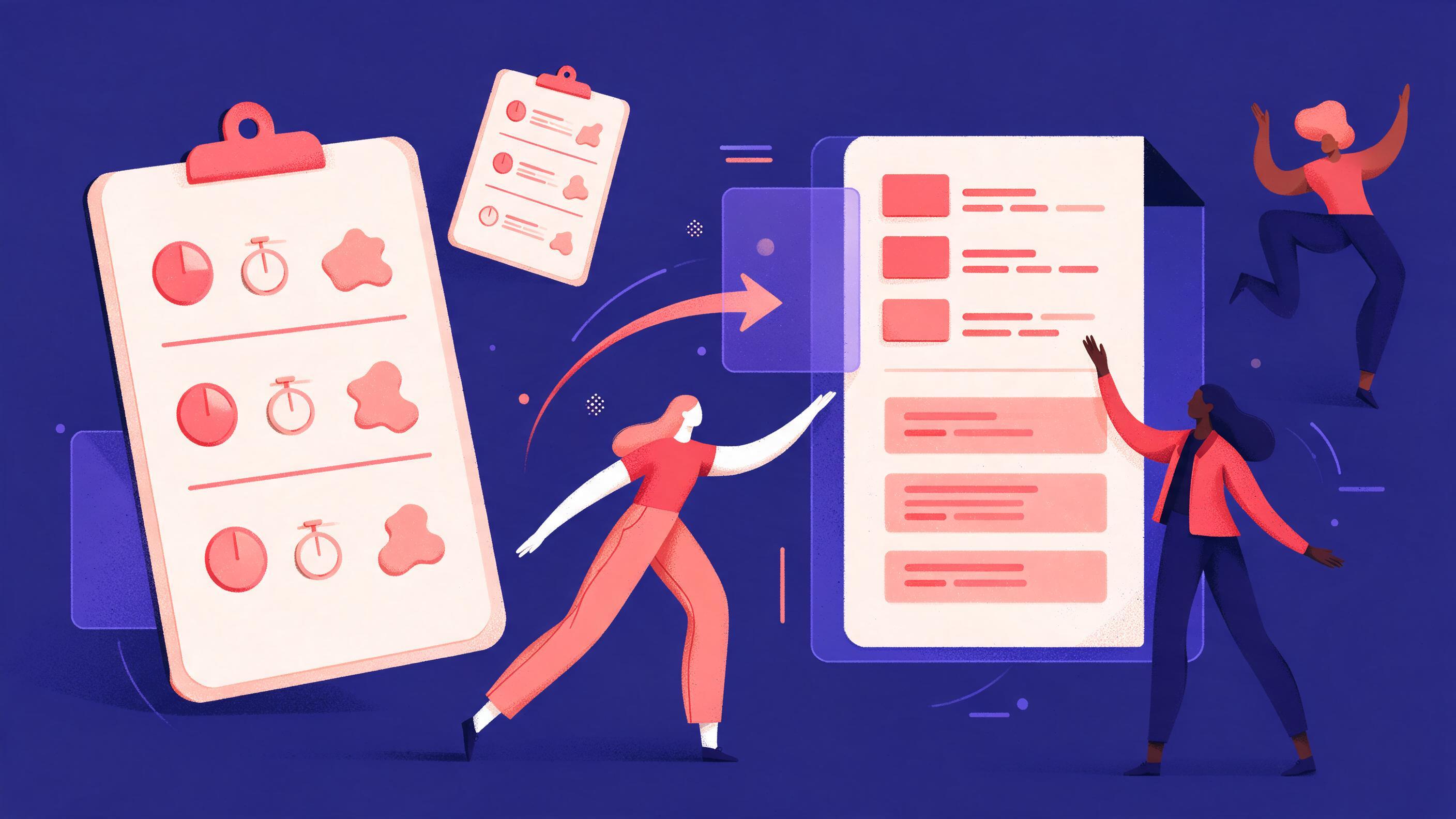
A split scene: on the left, a triage sheet on a clipboard with rows for severity, response time, and evidence; on the right, the same rows transformed into contract clauses on a legal document.
Key points

Key points

  1. 1An escalation clause works only when each severity level has an objective trigger, a clock, an evidence list and a named escalation path written into the contract.
  2. 2Support promises like "24-hour response" are ambiguous until the contract says whether that means acknowledgement, active triage or a fix, and whose clock is running.
  3. 3Vague escalation language gives vendors a "best effort" exit; published, measurable targets give you leverage in a quarterly review.
  4. 4Service credits are usually the only remedy attached to missed SLAs, so the credit schedule, exclusions and chronic-failure termination right matter as much as the response times.

Start from the triage sheet, not the template

Most escalation clauses fail for a boring reason: they were copied from a template and describe intent ("prompt response," "best efforts") rather than mechanics. The fix is to stop drafting from scratch and instead translate the triage sheet your operations team already uses. Every row of that sheet has four things you need in the contract: the criteria that put an incident in a severity band, the first action you expect, the time target, and who gets called when nobody moves.

The discipline matters because service level agreements only become enforceable when the promises are measurable. Guidance on support SLAs is blunt about this: a written commitment needs the covered service, the measurement window, the business hours, the severity level, the clock-pause rules, the exclusions and the evidence, because those details decide whether both parties calculate performance the same way after an incident (SupportGPT). If any of those six is missing, you have a marketing statement, not a clause.

Before drafting, confirm one thing internally: who owns the clock. In most companies the on-call engineer thinks in minutes, the account manager thinks in business days, and procurement assumes both are the same. Write the clause in the unit the incident commander uses.


Define severity levels with objective triggers

The single highest-leverage change you can make is replacing adjectives with thresholds. "Critical" is not a severity level. "Production system unavailable for more than 5 minutes, or error rate above 5% sustained for 10 minutes, or any confirmed loss or corruption of customer data" is a severity level, because two reasonable people reading it will reach the same conclusion on the same evidence.

This mirrors how mature security SLAs are built. A well-drafted security agreement separates availability from detection performance, because a fully available platform can still miss the thing that matters, and it defines threat scope, measurement period, exclusions, remedies and customer obligations before signature (Adaptive Security). For AI vendors the same logic applies to model behavior: an API returning HTTP 200 while the agent cites a nonexistent source is an incident, not uptime (Wavect).

SeverityObjective trigger (example)Response targetResolution targetClock
S1 CriticalProduction unavailable over 5 minutes, or error rate above 5% for 10 minutes, or confirmed data lossAcknowledge in 15 minutes, named engineer assigned in 30Restore service in 4 hours, root cause written up in 5 business days24x7
S2 HighFeature unavailable with a workaround, or latency above the agreed p95 for 30 minutesAcknowledge in 1 hourWorkaround in 8 business hours24x7 for acknowledgement, business hours for fix
S3 NormalDegraded output quality without outage, or single-tenant configuration issueAcknowledge in 4 business hoursFix or documented plan in 5 business daysBusiness hours, named time zone
S4 LowQuestion, documentation request, cosmetic defectAcknowledge in 1 business dayBest effort, tracked to closureBusiness hours

Two drafting rules fall out of that table. First, tie every trigger to something the vendor can observe or you can evidence, such as error rate over a stated window, a status page entry, or a support ticket with a timestamp. Second, define what happens when the parties disagree on severity: the safest mechanic is that the customer's initial classification governs until the vendor demonstrates, with evidence, that a lower band applies, and the clock never restarts during that discussion.

Separate acknowledgement from resolution, and write the clock rules

The most common ambiguity in AI vendor contracts is the word "response." Vendors use it to mean an automated receipt. Buyers assume it means an engineer is working the problem. A defensible clause states three separate obligations: how fast the vendor acknowledges and begins active triage, how fast it delivers a fix, workaround or documented next action, and what the customer receives when the vendor misses either. A receipt email is not active support, and the response clock should run from submission until acknowledgment and active triage begin (SupportGPT).

Clock rules need the same precision, because they are where time quietly disappears:

  • Business hours or 24x7. State the time zone, the public holidays excluded, and which severities run around the clock.
  • Pause conditions. The clock may pause only while the vendor is waiting on information it has specifically requested in writing, and it resumes on your reply. Blanket "customer delay" language is not a pause rule.
  • Scheduled maintenance. Cap it (for example, a stated number of hours per month, announced in advance) rather than leaving it open ended.
  • Measurement window. Decide whether targets apply per incident or as a monthly average, and say which. Per-incident targets are easier to enforce; averages let one catastrophic day hide inside a good month.

A useful benchmark from the security operations world: legacy SLAs written for human-only queues used 4-hour mean time to respond and 24-hour breach notification, while AI-assisted operations now target detection under 10 minutes and containment under an hour, and organizations with SOAR-integrated operations report mean time to respond 60 to 90 percent lower than those without automation (UnderDefense). You do not have to adopt those numbers, but you should ask your vendor which of its own metrics are contractual and which are averages it publishes for marketing.

Specify the evidence you must supply, and the evidence the vendor must keep

Every escalation clause should carry an evidence schedule in both directions. On your side, list exactly what the ticket must contain for the clock to start: account and tenant ID, request IDs or trace IDs, UTC timestamps of first and last failure, the error message or HTTP status, a representative log excerpt or payload, and the affected workflow. Anything not on the list cannot be demanded later as a precondition.

On the vendor's side, specify what it must retain and hand over. For AI services this is not optional plumbing, because you cannot prove a missed accuracy target without records of what the model did. A credible AI service schedule requires the supplier to retain traces that prove the metric without retaining everything, and to define the context bundle that travels with a human handoff (Wavect). Practical retention language looks like this:

Vendor shall retain, for at least 90 days, for each Severity 1 and Severity 2
incident: (a) request and trace identifiers, (b) model and configuration version
in production at the time, (c) timestamps for acknowledgement, assignment,
workaround and restoration, and (d) the root cause summary. Vendor shall provide
these records to Customer within 5 business days of a written request.

That last sentence is what turns an escalation meeting into a factual review. Without it, the post-incident call becomes a debate about what happened.

Build the escalation path into the contract

An escalation path is not a distribution list in a portal; it is a sequence of obligations with deadlines. Write it as tiers with names, roles and time triggers, and state that the obligation is to notify, not merely to attempt contact.

A workable structure: at 30 minutes without acknowledgment on an S1, the vendor's on-call manager is notified by the customer's incident commander; at 2 hours without a workaround, the vendor's director of engineering and the customer's account executive join a live bridge; at 8 hours, a named executive sponsor on each side is engaged and a written remediation plan is due within 24 hours. Designate a single technical contact and a single commercial contact on each side, with a named backup for each, and require the vendor to update the list whenever a person changes role.

This is where most AI vendor contracts are thinner than the buyer assumes. The model provider's own SLA does not cover your agent: if the underlying model is unavailable, or the vendor swaps model versions, your escalation rights against the vendor you contracted with are the only ones you have (Wavect). Add a clause requiring advance notice, or at minimum prompt disclosure, when the vendor changes the model or configuration serving your workload, and treat that change as a production release that can itself generate an S2.

Decide what counts as a breach, and what the remedy is

This is the part that determines whether the clause has teeth. Three questions decide it.

First, is a missed target automatically a breach, or does it require a claim? Vendors typically require a written credit request within a short window, commonly 30 days from the incident, and customers who fail to track incidents forfeit credits even when the breach is uncontested (ContractKen). If you accept a claims process, put your monitoring duty in the contract as a customer obligation with a reminder mechanism, or build the claim into the vendor's monthly report so you never have to remember it.

Second, what are the credits, and are they your only remedy? Where the SLA defines performance commitments, the service credits clause specifies what the customer gets when they are missed: usually a percentage of the monthly recurring fee, applied against the next invoice, escalating as the shortfall deepens. Most vendor-drafted clauses make credits the customer's sole and exclusive remedy for SLA failures, so carve out data loss, security incidents and chronic failure from that limitation (ContractKen). Also check the exclusions: scheduled maintenance, emergency patches, customer-caused outages, force majeure, beta features and third-party network failures can swallow the remedy entirely if drafted broadly (ContractKen).

Third, what is the exit? Add a chronic-failure termination right, for example two or more S1 misses in a rolling three-month period or any single outage beyond a defined duration, and make it a termination for cause without a cure period (ContractKen). For AI services, add an accuracy or quality trigger alongside the availability trigger, since a vendor that is 100 percent available while producing unusable output has technically complied with an uptime-only clause.

This matters commercially because AI spend is rarely just the subscription. License fees typically represent only 20 to 40 percent of true AI implementation costs, with the rest in integration, training, change management, ongoing operations and exit (Pertama Partners). A service credit worth a fraction of a monthly fee recovers almost none of that exposure, which is why negotiation should trade shallow credits for deeper commitments: faster targets, better evidence, and a real exit.

Translate leadership expectations into the escalation terms

Executives buying AI often carry expectations formed by consumer tools: instant answers, always on. Contracts written for that expectation overcommit the vendor on acknowledgement and undercommit on resolution, which produces a clause that looks generous and enforces nothing. A modern support SLA has to account for the fact that automation absorbs routine tickets while the remaining human queue is harder, more urgent and more visible, so the same target should not be promised across every remaining case (SupportGPT).

The negotiation posture that follows is not adversarial, it is specific. Bring your triage sheet to the call, hand the vendor the severity table and your evidence list, and ask one question per row: can you commit to this, and can you show me the report that will prove it? A vendor that publishes a concrete commitment, such as a two-minute alert-to-triage and a 15-minute escalation for critical incidents, is offering something you can hold it to, in contrast to competitors that keep those numbers behind a sales conversation (UnderDefense).

If your team is still defining the AI workflow and the vendor landscape at the same time, a short structured conversation usually saves a redraft cycle. Quanta Consulting runs a free 30-minute AI discovery call covering your goals and a tailored recommendation, and it pairs naturally with this exercise.

FAQ

FAQ

What is the difference between a support escalation clause and an SLA?

An SLA defines the performance commitments, such as availability, response times and resolution targets. An escalation clause defines what happens when those commitments are at risk or missed: who is notified, within what time, at which level of seniority, and with what evidence. In practice the two sit in the same schedule, and the escalation clause is what makes the SLA actionable during a live incident.

How many severity levels should I define?

Three or four. Fewer than three collapses everything into "urgent" and "not urgent," which is what most disputes are about. More than four creates resolution fights over adjacent bands. Four bands (critical, high, normal, low) typically map cleanly onto an existing triage sheet, and each band needs its own triggers, response target, resolution target and clock rule.

Should response times run on business hours or 24x7?

Match the clock to the business impact. If an outage stops revenue, payments or safety-relevant workflows, run acknowledgement 24x7, and define the time zone and excluded public holidays explicitly. Resolution targets can reasonably run on business hours for lower severities. Whichever you choose, state the pause conditions, cap scheduled maintenance, and say whether targets apply per incident or as a monthly average.

What evidence should the contract require me to provide?

List it exhaustively so it cannot expand later: account or tenant identifier, request and trace identifiers, UTC timestamps for first and last failure, error message or status code, a representative log excerpt, and the affected workflow. Require the vendor to confirm in writing within the response window if the submission is incomplete, and state that the clock runs until that confirmation. Without the confirmation rule, a vendor can claim missing evidence days after the fact.

Can I get out of the contract if the vendor keeps missing targets?

Only if you negotiate it. Service credits are usually the sole and exclusive remedy for SLA failures, so they compensate but do not release you. Add a chronic-failure termination right tied to a stated number of missed S1 targets in a rolling period, or any single outage beyond a defined duration, and carve data loss, security incidents and quality failures out of the exclusive-remedy language.

Sources

Sources

  1. Support Service Level Agreement Guide for 2026
  2. Email Advanced Threat Protection SLA: Metrics, Detection ...
  3. AI Agent SLA Template: Accuracy, Latency & Handoff | Wavect
  4. AI SOC SLA in 2026: MTTR, Benchmarks, Clause Tables ...
  5. Service Credits Clause: Tiers, Claims & Exclusions
  6. AI Total Cost of Ownership (TCO) Guide | Calculate True AI…
About the author

About the author

Antonio Evans
Antonio Evans

Antonio Evans is the founder of Quanta Intelligence and a fractional CTO who builds HIPAA-ready AI systems for health and life-science companies. Before that he was technical co-founder of FriendsEAT for twenty years, CEO of Socialdraft, and a data engineer at IBM. Antonio lives with his dog Santino in Lisbon, Portugal.

All articles