AI agents

Pinning Model Versions in Tests: Aliases and Snapshots

Antonio Evans10 min read

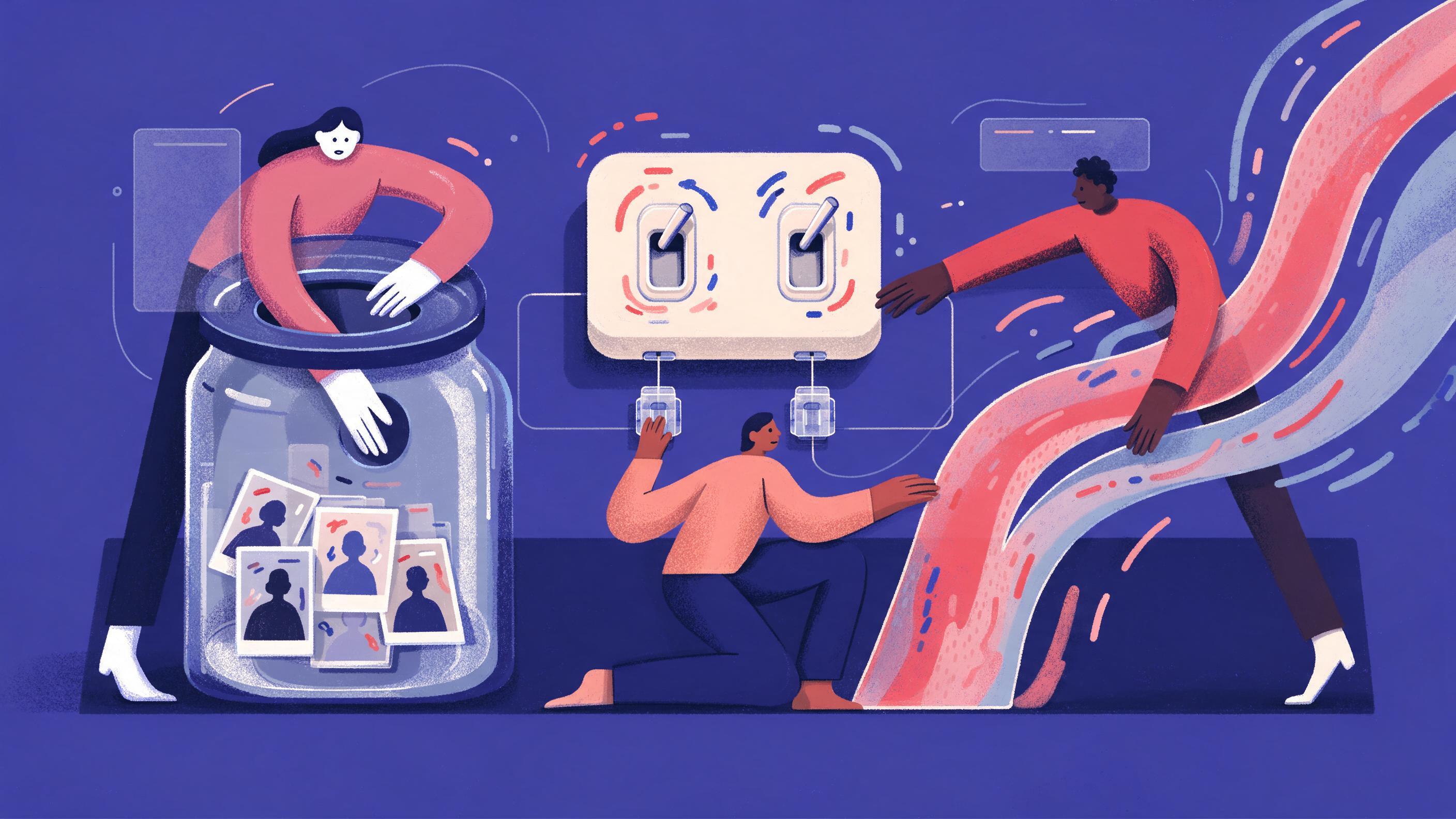
A split workbench with a jar of dated model snapshots on the left and a flowing stream labeled with a moving alias on the right, and a test harness in the center with two switches set to snapshot and alias.
Key points

Key points

  1. 1Model aliases and fixed snapshots pin different things: an alias pins a name that the provider can repoint, a snapshot pins a set of weights and a serving configuration.
  2. 2Retirement is the risk to plan for, and notice periods differ by tier, so tests that call a moving alias fail loudly on retirement while tests on pinned snapshots keep working until the snapshot itself is retired.
  3. 3Re-record fixtures when a snapshot is retired or when you deliberately move an alias, and commit the recording script so the diff shows exactly what changed.
  4. 4Most tests should not hit the API at all; reserve real calls for a small, explicitly labeled suite that checks contract and schema behavior.

What an alias and a snapshot each pin

A model identifier in an API request is a pointer, and the two popular forms of pointer guarantee different things. Anthropic's documentation is unusually explicit about this: every Claude model ID identifies a pinned version, the underlying model stays constant for the lifetime of that ID, and dateless IDs in the current generation (for example claude-sonnet-4-6) are snapshots, not evergreen pointers that route to the newest weights (Claude model IDs and versioning). The same page notes that older minor-version aliases such as claude-sonnet-4-5 do behave as convenience pointers that resolve to the most recent dated snapshot for that minor version.

That single distinction is the whole article in miniature. A snapshot pins behavior; an alias pins a promise. Pinning a snapshot means your test asserts against a specific set of weights, so a passing test tells you your prompt, parsing and tool schemas still work with the thing you shipped. Pinning an alias means your test asserts against whatever the provider routes to that name, so a passing test tells you your code still works with the current default, and a failing test may be telling you the underlying model changed, not that your code broke.

Two further wrinkles matter when you write tests. First, weights can be fixed while serving infrastructure changes. Anthropic warns that routers, safety classifiers and sampling logic around a model can change over time and occasionally produce minor behavioral differences even when the model ID and weights have not changed (Claude model IDs and versioning). Second, the same model can carry different lifecycle dates on different platforms: Anthropic states that partner-operated platforms such as Amazon Bedrock and Google Cloud set their own retirement schedules, so a model's status and dates can differ by platform (AI model deprecation and lifecycle calendar). A test suite pinned to a Bedrock model ID is therefore not testing the same lifecycle as one pinned to the first-party API ID.

What you pinWhat the test actually protectsFailure mode when the provider changes somethingBest fit
Fixed snapshot ID (dated or current-generation dateless)Prompt, parser, tool schema and tool-choice logic against known weightsSnapshot is retired and calls error out; occasional drift from serving changesRegression assertions you want to be stable
Alias (minor-version pointer or vendor default name)Your code's compatibility with whatever the provider currently serves under that nameSilent behavior change passes or fails tests for reasons you did not chooseA small smoke suite that should break on retirement
Recorded fixtureSerialization, parsing, error handling, tool-call shapesNothing, until you re-recordEverything else

What breaks when a provider retires a model

Retirement is the event your test strategy has to survive. When a model is shut down, requests to that model ID fail immediately rather than degrading gracefully: OpenAI's deprecation page describes retired models as completely turned off and no longer accessible, and states that impacted customers are notified by email and in the documentation (OpenAI API deprecations). A third-party tracker summarizing the same page describes the shutdown stage as the point where any request to the model ID fails with an invalid model error (OpenAI deprecated models and shutdown schedule).

The notice you get depends on the model tier, and this is where test design meets operations. OpenAI's page states minimum notice periods of at least 6 months for generally available models, at least 3 months for specialized variants (chat, codex and deep-research variants are the examples given), and as little as 2 weeks for preview models, which it does not recommend for business-critical production workloads (OpenAI API deprecations). The tracker reports that a specific batch of GPT-4o and GPT-4.1 snapshots was announced with roughly 3 months of notice despite the general 6-month guidance (OpenAI deprecated models and shutdown schedule). The practical reading: treat the published minimum as a floor, not a schedule you can plan sprints against.

This is the decision rule that matters, and it is the opposite of what many teams assume. If a test calls a moving alias, retirement shows up as a loud, immediate failure, which is exactly what you want from a canary. If a test calls a pinned snapshot, retirement shows up as a failure too, but only when that specific snapshot is retired, which may be months after the alias moved. Both fail; they just fail at different times and for different reasons. The mistake is having your main regression suite pinned to a snapshot nobody monitors, so the first time you learn about the retirement date is when CI goes red the morning calls start erroring.

There is also a quieter breakage: an alias can move without any retirement at all. Your test then fails because the provider improved the model, and your assertion on exact output text was the thing that was wrong. That is a false alarm, and false alarms are how suites get muted.

How to structure fixtures that call the real API

Treat the real-call suite as two layers with different jobs.

The first layer is recorded fixtures: canned request/response pairs captured once and replayed in ordinary unit tests. This is the standard mocking pattern for agent tests, where you mock the external dependency so execution is deterministic and offline-friendly, and you test that your agent calls the right tools with the right parameters rather than testing the provider (Scenario testing guide on mocks). Traffic replay tooling makes the same argument at the system level: synthetic tests miss real sequencing and payload variation, so teams capture production requests, sanitize them, and replay them against a staging environment (Speedscale on traffic replay). Keploy's environment replay documentation describes recording API traffic from production read-only and replaying it in staging, with detected discrepancies reported automatically (Keploy environment replay).

The second layer is a small live suite that actually calls the API, gated behind an environment variable and a budget so it never runs on every commit. Its job is to answer one question: does our request still satisfy the provider's contract today?

A fixture recorder worth committing looks roughly like this. It writes one JSON file per case, records the exact model identifier used, and refuses to overwrite an existing file unless you pass a flag, so re-recording is always a visible, reviewable change.

import json, pathlib, os

FIXTURES = pathlib.Path("tests/fixtures/llm")

def record(case_id, client, model_id, request, force=False):
    path = FIXTURES / f"{case_id}.json"
    if path.exists() and not force:
        raise SystemExit(f"{path} exists; pass force=True to re-record")
    response = client.responses(request, model=model_id)
    path.write_text(json.dumps({
        "model_id": model_id,
        "request": request,
        "response": response.model_dump(),
    }, indent=2, sort_keys=True))

Store the model identifier inside every fixture. When a snapshot is retired, a one-line grep finds every fixture recorded against it, and the re-record diff shows you exactly which outputs moved.

For the live suite, keep the assertions about structure, not prose. Assert that the response parses, that every required tool argument is present and typed correctly, and that no tool name outside your declared list appears. Cohere's documentation is a useful reference point for why this is worth asserting: with strict tool use enabled, the API guarantees that tool names and parameters match the definitions, required parameters are included and data types are respected, which eliminates hallucinated tool names and parameters in exchange for a cap of 200 fields across all tools in a call (Cohere parameter types for tool use). If your provider offers a strict schema mode, your live tests should assert you are actually getting that guarantee.

Tool definitions themselves are worth testing, because they are natural-language contracts and they go wrong in predictable ways. ToolFuzz, an automated tool-documentation tester, found that all LangChain tools and the majority of Composio tools it evaluated were erroneous, and it detected far more erroneous inputs than prompt-engineering-based testing (ToolFuzz on arXiv). The lesson for your fixture set: include malformed and edge-case arguments for every tool, not just the happy path.

A decision framework for which tests call which model

Use this rule set and you will not have to relitigate it per test.

Test typeRuns onModel referenceShould it fail on retirement?
Unit tests of parsers, serializers, tool executorsEvery commitNone (recorded fixture)No
Agent loop and tool-selection testsEvery commitNone (recorded fixture or mocked tool)No
Contract and schema testsNightly or pre-releaseFixed snapshotYes, and that is the signal to re-record
Smoke check that the vendor default still worksWeekly or pre-releaseAliasYes, deliberately
Migration validation before a retirement dateOnce per migrationOld snapshot plus replacement snapshotYes, by design

The smoke test on an alias is the one place a moving target earns its keep, because you want it to break when the provider repoints the name or retires the model behind it. Keep its assertion shallow: a 200 response, a parseable body, one required field present. Do not assert exact prose there, or you will be chasing the model rather than the contract.

The contract suite on a fixed snapshot is where you put the detailed assertions, because you have chosen those weights and any change is a change you caused. When that snapshot is retired, the suite goes red, and the fix is mechanical: swap the identifier, re-record, read the diff, decide whether each movement is acceptable.

There is one more consideration that shapes the table. Non-determinism means a single trial proves little about reliability; Splunk's writeup on agent testing argues that teams need consistency metrics such as Pass^k, the probability that all k independent trials succeed, rather than one green run (How to test AI agents effectively). If you adopt that idea, apply it to the live suite only. Replaying the same recorded fixture k times proves nothing new.

Handling drift, deprecation notices and re-recording

Drift comes from three places: a snapshot's serving infrastructure changing under you, an alias moving to a new snapshot, and your own prompt or schema edits. The first two are external and the third is yours, so the recording workflow should make the difference obvious.

Record one fixture per (prompt, model, options) combination and never share a fixture across model identifiers. When you re-record, do it in a single commit that touches only fixtures and any assertion text you deliberately changed, so reviewers can see the behavioral movement in isolation. If a diff is enormous, that is a finding: it usually means a prompt or schema change landed without anyone recording it deliberately.

Watch the deprecation channels rather than the tests. OpenAI publishes model shutdown dates programmatically through the List models endpoint, whose optional shutdown_date field carries the date as a YYYY-MM-DD string or null when none is announced (OpenAI API deprecations). A scheduled job that reads that field and opens a ticket when a snapshot you use has a shutdown date is cheap and removes the guesswork. Community threads on specific models show how much confusion dates cause, including users asking whether only a dated variant or an entire family is affected (OpenAI community thread), which is another argument for reading the authoritative page rather than forum summaries.

When you do migrate, run both snapshots side by side against the same fixtures and diff the outputs before you change any assertion. This is the same logic as the old advice for testing external APIs: don't let the test touch live data with side effects, and isolate the layer that constructs requests and parses responses so you can test it independently (Stack Overflow discussion on integration tests for external APIs). Modern practitioners add a pragmatic twist: build mock APIs so the team can exercise error paths, timeouts and rate limits without waiting on anyone (WireMock on testing AI agent API interactions).

If you are testing agents rather than single calls, Trajectory-aware checks belong in the recorded layer, not the live one. Splunk's guidance is that a correct final answer can still come from an unsafe or policy-violating path, so evaluations should inspect tool calls and reasoning steps rather than only the outcome (How to test AI agents effectively). Recorded tool-call sequences are exactly the artifact that lets you assert on that path cheaply. Splunk also reports research finding that a large share of enterprises shipped agentic features that had passed internal evals and still caused a customer-facing failure, which is a good argument for keeping a deterministic baseline before layering on model-specific checks (How to test AI agents effectively).

A worked example with numbers

Suppose you maintain 240 tests that touch a model, across four test files. You do the arithmetic before redesigning.

Today: 240 tests call the alias on every CI run, at a mean of 900 input and 300 output tokens each. That is 288,000 input tokens and 96,000 output tokens per run, plus latency, flakiness and a dependency on the provider's availability during CI. If CI runs 40 times a day, you are making 9,600 live calls a day to prove that your parsers still work.

After redesign: move 228 tests onto recorded fixtures, keep 8 contract tests on a fixed snapshot, and keep 4 smoke tests on the alias. Live calls per run drop to 12, a 95 percent reduction in provider calls and token spend, and 228 of those tests become deterministic and offline. The 8 contract tests run nightly and before each release. The 4 smoke tests run weekly, and their whole purpose is to fail if the vendor default changes or disappears.

The remaining risk is concentrated in exactly the place you can manage it: 12 tests whose failure modes you have named in advance. Add a job that reads the shutdown_date field for every model ID your suite references (OpenAI API deprecations), and you have converted an outage into a ticket.

If your team runs several vendors and that 12-test live set spans more than one API, the plumbing becomes the annoying part: different keys, different request shapes, different error codes, different deprecation endpoints. Quanta Inference exposes text, image, video, audio and embedding models behind one OpenAI-compatible API key, which lets a live contract suite target one set of request conventions while still choosing which underlying model each test pins. That reduces the surface area of your real-call tests rather than the number of models you can evaluate.

FAQ

FAQ

Should tests ever call a real model API?

Yes, but sparingly and deliberately. Keep a small suite that runs on a schedule or before release to confirm your request shape and tool schemas still satisfy the provider's contract, and keep every detailed regression assertion on recorded fixtures. Running the bulk of your suite against a live API costs money, adds flakiness and ties your CI to someone else's uptime.

How do I know when a snapshot I pin will be retired?

Read the provider's deprecation page and, where available, poll its model listing for shutdown dates. OpenAI documents an optional shutdown_date field on its List models endpoint that returns a YYYY-MM-DD date or null (OpenAI API deprecations). Treat published notice periods as minimums, since specific batches have been announced with less than the general guidance (OpenAI deprecated models and shutdown schedule).

Does a fixed snapshot guarantee identical outputs?

No. The weights stay fixed for the lifetime of the identifier, but the serving infrastructure around the model, including routers and safety classifiers, can change and occasionally produce minor behavioral differences (Claude model IDs and versioning). That is one more reason to assert on structure and contract rather than exact prose.

Should the whole agent test suite hit the real API?

No. Mock at the boundary where you can control it, and test agent reasoning and tool selection against mocked tools using real tool-calling mechanics, which is the most common pattern for agent tests (Scenario testing guide on mocks). That keeps the agent logic under test while removing the provider as a source of noise.

When is it worth paying for live traffic rather than recorded fixtures?

When you need to know how your system behaves under real request shapes, sequencing and edge cases that synthetic data misses (Speedscale on traffic replay). Capture read-only traffic, sanitize it, replay it in staging and diff responses against a baseline, as environment replay tooling describes (Keploy environment replay). For most teams, that belongs in a pre-release stage, not on every commit.

Sources

Sources

  1. Model IDs and versioning - Claude Platform Docs
  2. AI Model Deprecation and Lifecycle Calendar - Anthropic, ...
  3. Deprecations | OpenAI API
  4. OpenAI Deprecated Models List and Shutdown Dates (2026)
  5. Mocking External APIs in Agent Tests, Scenario
  6. Traffic Replay: Production Without Production Risk
  7. Environment Replay - Real Production Traffic, Safely ...
  8. Parameter types for tool use (function calling) - Cohere Documentation
  9. ToolFuzz - Automated Agent Tool Testing
  10. How To Test AI Agents Effectively - Splunk
  11. What is the sunset date for gpt-4o-mini? - Deprecations
  12. How are integration tests written for interacting with ...
  13. Test AI agents' API interactions using WireMock Cloud and ...
About the author

About the author

Antonio Evans
Antonio Evans

Antonio Evans is the founder of Quanta Intelligence and a fractional CTO who builds HIPAA-ready AI systems for health and life-science companies. Before that he was technical co-founder of FriendsEAT for twenty years, CEO of Socialdraft, and a data engineer at IBM. Antonio lives with his dog Santino in Lisbon, Portugal.

All articles