 Antonio Evans
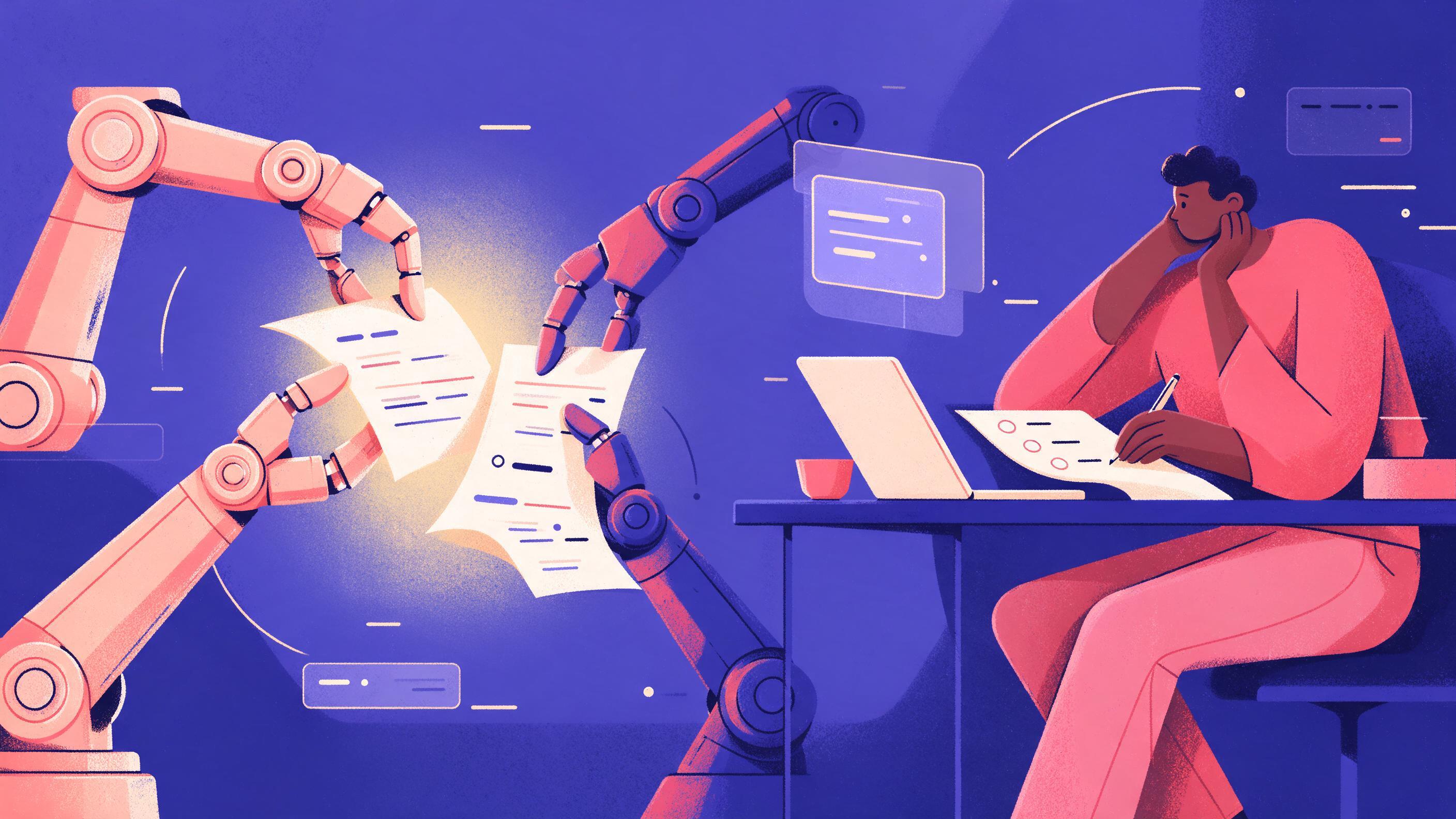
The intuitive assumption is that running the same task through two agents should produce nearly identical results. It does not. Nondeterminism, different context windows, and deliberately different role prompts all push outputs apart, and one survey of the problem puts disagreement rates between parallel agents at 20% to 40% depending on task type tianpan's conflict resolution analysis. The same write-up notes that unstructured multi-agent networks can amplify errors by more than seventeen times relative to a single-agent baseline when no conflict resolution layer exists.
The dangerous part is not the disagreement itself. It is that the disagreement is invisible. Many systems silently pick one answer, log a final decision, and discard the losing branch. When something breaks downstream, you cannot tell which agent was wrong or even that they disagreed, which makes debugging three to five times longer than a single-agent failure tianpan's conflict resolution analysis.
Parallel work is now a normal architecture rather than an experiment. Teams deliberately run many coding agents at once on isolated branches and coordinate them from above Addy Osmani's orchestration write-up, and multi-agent coding workspaces are only reliable when work is spec-scoped and evidence-based Augment Code's multi-agent workspace guide. Once you run two or more agents on the same question, you need a rule for picking the winner.


