
Founders

How to Design a Smoke Test That Produces a Decision

Antonio Evans10 min read

A split-screen illustration: on the left, a laptop showing a simple landing page with a large 'Get Started' button and a counter displaying '47 qualified signups' next to a green checkmark; on the right.
Key points

Key points

  1. 1A smoke test produces a decision only if you write the decision rule, the one action that counts as intent, and the sample size before launch.
  2. 2Estimate the baseline conversion rate you would expect from a mediocre version of the idea, then set the minimum improvement that would justify building.
  3. 3Choose a landing page test when you need volume and a cheap signal, and a concierge test when the offer needs a human to deliver it and you want depth.
  4. 4Treat raw page views, waitlist size and social engagement as vanity signals unless they are tied to a qualified action and a pre-set threshold.

Start with one falsifiable hypothesis

A smoke test that ends in an argument usually started with a statement nobody could disprove. "People want an easier way to reconcile invoices" cannot fail, because any positive number gets read as agreement. "At least 4 percent of finance managers who see the page will book a 20 minute call to join a paid pilot" can fail, and that is the point.

Write the hypothesis in one sentence with four parts: the audience, the offer, the action, and the number. Then add the disconfirming condition. If the observed rate lands at or below that number, you commit to killing or reshaping the idea, not to running the test again with a friendlier definition.

Validation frameworks consistently stress that talking to people produces learning but not validation on its own. Scott McLeod argues that validation needs both acquisition and activation data, meaning you must acquire traffic and then observe conversion, not just collect opinions in his landing page guide. Harvard Innovation Labs makes a similar point from the demand side: confirm the customer recognizes the problem, is actively looking for a solution, and has budget, rather than asking whether they like your idea in its demand validation guide.

A practical template:

We believe [audience segment]
will take [one measurable action]
at a rate of at least [X percent]
when shown [the offer and channel].
If the rate is at or below [Y percent] after [N qualified visitors],
we will [kill / reshape] the idea.

Keep the audience narrow enough that you can buy or borrow traffic for it. "Small business owners" is a channel problem disguised as a hypothesis. "Bookkeepers at firms with two to ten staff who file quarterly VAT returns" is testable, because you know where those people read and which keywords they search.

One more rule: one hypothesis per test. If you change the headline, the audience, and the offer at once, a passing result tells you something worked but not what, and a failing result gives you no way to iterate.

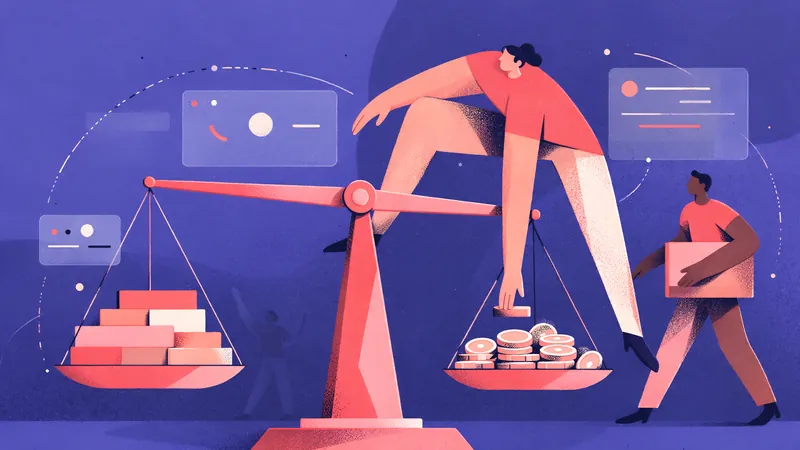
Landing page or concierge test

Both are smoke tests in the broad sense, because both expose an offer before the product exists. They answer different questions and have different failure modes.

The landing page test asks whether strangers will respond to a promise at scale. Todd Jackson's interviews with founders at companies including Flexport and Vanta show that the strongest early validation came from a specific, differentiated promise rather than a broad category claim in Lenny's Newsletter. KickoffLabs puts the operational version plainly: start with one specific promise, design the page around the signup, and be honest about what exists today in its landing page chapter.

The concierge test asks whether people will accept and pay for the outcome when you deliver it manually. Harvard Innovation Labs describes it as a manual process where you deliver the service personally, then automate the most time-intensive parts only after the problem and solution are confirmed in its demand validation guide. For a service business, a manual delivery is also a genuine smoke test: nobody has to pretend the product exists.

Design choiceLanding page testConcierge test
Question answeredWill the target audience respond to this promise at volume?Will people accept and pay for this outcome when delivered manually?
Primary metricQualified conversion rate (signup, booked call, deposit)Paid engagements, repeat usage, willingness to pay
Sample neededHundreds to thousands of qualified visitorsAs few as ten to thirty serious conversations
Time to signalDays to a few weeks, depending on trafficOne to three weeks of selling and delivering
Main costAd spend and copywritingYour hours and delivery effort
Failure modeCheap clicks from a curious but wrong audienceSmall sample that flatters you because you picked friendly buyers
Honest disclosureA clear "in development" note at the doorNone needed, you really are doing the work

The decision rule for choosing between them is straightforward. If your offer can be described in one sentence and delivered by software later, use a landing page, because you need volume to get a statistically usable signal. If the offer involves judgment, bespoke work, or a relationship, use a concierge test, because a click means almost nothing when the buyer expects a human. If you have no audience and no ad budget, concierge wins by default: ten real conversations beat a page with forty visitors.

Fake door tests sit inside the landing page family. ConfigCat defines the method as presenting a feature as if it exists and tracking how many users attempt to engage with it, with the warning that you must be transparent when someone clicks in its fake door explainer. The Koji guide adds the useful refinement that a click rate means little without a benchmark or control decided before launch in its fake door guide.

Pick one action that proves intent

The most common design error is choosing an action that costs the visitor nothing. Email signups with no qualification are nearly free to give, so they measure curiosity. A booked calendar slot, a deposit, or an application form with three screening questions measures intent, because it costs time or money.

Rank candidate actions by cost to the participant:

  1. Page view or scroll depth. Cost: nothing. Signal: almost none.
  2. Email address only. Cost: a few seconds. Signal: weak.
  3. Email plus two qualifying questions (role, team size, current tool). Cost: a minute. Signal: moderate.
  4. Booked 20 minute call, no payment. Cost: a calendar slot and a small social commitment. Signal: strong for B2B.
  5. Refundable deposit or prepayment for early access. Cost: real money, small amount. Signal: strongest available before you build.

Match the action to the size of the decision you are making. If you plan to spend three months building, a booked call is a reasonable bar. If you plan to raise money on the strength of the idea, a deposit is more honest.

The Good's smoke testing guide gives a concrete consumer example: an online media site that wanted to know whether a "snooze my subscription" feature would reduce cancellations added the button and measured clicks, sending clickers to a page saying the feature was coming soon in its five step guide. The action was a click, appropriate because the cost of building was small and the metric was directly tied to the behavior of interest.

For a B2B test, the equivalent is a call booking. For a marketplace, it is a listing or a demand-side post. For a paid tool, a card-authorized pilot signup is often the only number a skeptical colleague will accept.

Two diligence points make the action trustworthy. First, deduplicate: count one conversion per person or per company, not per session. Second, instrument the source: record which channel produced each conversion, because a blended rate hides that all your qualified signups came from one newsletter mention KickoffLabs recommends comparing traffic sources and conversion rates.

Where the build itself is the bottleneck, a short internal prototype costs less than a badly run test. Quanta can take a described page, form, or small app and build it with you, which is often faster than wiring analytics and a qualification flow by hand: https://quantaintelligence.ai/.

Set the baseline and threshold before launch

A threshold with no baseline is a guess. A baseline with no threshold is a report. You need both, written down before the first visitor arrives.

The baseline is the rate you would expect if the idea were mediocre but not dead. There are three honest ways to get it:

  • Your own prior pages. If your last three offers converted 1.8, 2.2 and 2.6 percent of qualified visitors to a signup, start there.
  • A comparable public page. A competitor's pricing page traffic is not public, but the shape of your channel is: if the keyword volume is 900 searches a month and you expect a 20 percent click-through on an ad, you know your ceiling.
  • A control offer. Run two versions of the same page, one for your new idea and one for something you already sell. The difference is your signal, and it controls for channel quality.

The threshold is the minimum improvement that would justify building. This is a business decision, not a statistical one: the minimum detectable effect should reflect the smallest change that justifies the cost of building and the opportunity cost of the test as explained in this sample size walkthrough. If building costs three engineer-months and a 0.2 percentage point difference would not change your plan, then the test needs to detect more than 0.2 points or it is not worth running.

The arithmetic gets uncomfortable fast. At a 2 percent baseline, detecting a 10 percent relative lift, meaning 2.0 to 2.2 percent, at 95 percent confidence and 80 percent power needs roughly 80,700 visitors per variation worked through in Mida's traffic guide. Aim for a 20 percent relative lift instead and the same page needs about 21,000 per variation. That is the trade you are making when you set the threshold: a bigger required lift needs far less traffic and the same relationship is spelled out in Cro Metrics' sample size guide.

A worked example makes it concrete. Suppose you sell a bookkeeping service to design studios. You expect a mediocre offer to convert 1.5 percent of qualified visitors into a booked call. You decide that anything below 3 percent means the offer is not strong enough to build a product around, and anything at or above 3 percent means you will run a paid pilot. That is a doubling, a 100 percent relative lift. Doubling the required lift cuts the sample dramatically compared with the 10 percent case above, which is why early smoke tests should chase large effects. If the required effect is large and the traffic is small, you do not have a test. You have a reason to run a concierge test instead.

Set two secondary rules at the same time. A stopping rule, for example "we stop at 600 qualified visitors or 14 days, whichever comes first," prevents the peeking problem, where you keep checking results and stop when they look good which inflates false positives, as described here. And a segment rule: decide whether you will report the blended rate or the rate for the narrow target segment, and do not switch after seeing the numbers.

If your traffic cannot reach the threshold in a reasonable window, say so in the written plan. Then either accept a qualitative read from a concierge test, or accept that your test is a directional signal and label it that way in the memo.

Avoid the signals that look like validation

Vanity signals are the ones that rise whenever anyone does anything. A thousand page views is a distribution result, not a demand result. A 40 percent email capture rate from a LinkedIn post is a measure of your post, not the market.

Others worth flagging:

  • Raw waitlist size. A waitlist without qualification tells you how well the page traveled, nothing about who joined.
  • Apparent click-through on a fake door with no control. A click rate is only meaningful against a benchmark you set in advance as the Koji guide notes.
  • Friends and network asks. KickoffLabs separates network validation from landing page validation in its guide structure, and the reason is that your network converts for you, not for the offer see the chapter list.
  • Repeated exposure. Userpilot warns that a segment that has already seen a fake door will grow skeptical if you show another, and recommends spacing tests at least six months apart per segment in its fake door analysis.
  • Survey enthusiasm. "Would you use this?" answers are cheap. The Mom Test principle is to ask about past behavior and current workarounds, not future intentions as summarized by Harvard Innovation Labs.

There is also a cost to running the test badly. Fake door testing carries a real reputational risk if users feel tricked, which is why the transparency step is not optional as Chameleon's guide emphasizes. Show a clear "in development" message, offer a genuine way to be notified, and never let a clicker land on a dead end.

One structural check: if the action you chose could be produced by bots or by an unqualified audience, assume it was. A signup form that accepts any email domain, or an ad campaign targeting broad interest keywords rather than job titles, will inflate your numerator. Restrict the audience, verify the email domain, and ask one qualifying question.

Run it, then write the decision memo

Execution is short if the design is done. A minimum viable smoke test run looks like this:

  1. Publish a single page with one promise, one action, and a visible note about what exists.
  2. Set up one traffic source with a fixed budget and a fixed keyword or audience definition, so you can compute your denominator.
  3. Track visitors, qualified visitors, conversions, and source in one table from day one.
  4. Hold the test for the pre-agreed duration or visitor count. Do not extend it because the line is close.
  5. Write the memo the day you close the window.

The memo is where most teams lose the decision. It should be one page and contain the hypothesis as written before launch, the actual counts, the conversion rate with its confidence interval, the threshold, and the verdict. Adding a confidence interval matters: at 120 conversions, an observed 3.1 percent rate has a range wide enough that a 2.6 percent result is entirely possible. If your threshold sits inside that range, the honest verdict is "inconclusive, and here is what we would need to resolve it."

Teams that measure carefully but decide by feel often discover afterward that the result would not have changed anything. Writing the kill condition in advance is the only defense. It also gives you a secondary benefit: a documented negative result is reusable. When someone proposes the same idea in eight months, you have a file.

Once the smoke test passes, the next real decision is what to build and how fast. This is where a decision needs a delivery path, and the sensible move after a pass is to scope the smallest version and get it into users' hands. A short discovery call is the low-risk way to pressure test your interpretation of the result before you commit build time: https://quantaintelligence.ai/calendar.

FAQ

FAQ

How many visitors do I need for a smoke test to mean anything?

It depends on your baseline and the lift you need to detect. At a 2 percent baseline, detecting a 10 percent relative lift at standard confidence and power needs tens of thousands of visitors per variation, while detecting a 20 percent relative lift needs roughly a quarter of that per this walkthrough. Early smoke tests should therefore chase large effects or switch to a concierge test. If you cannot reach the sample, say so in the plan and treat the result as directional.

What is the difference between a smoke test and an MVP?

A smoke test measures interest in something that does not exist or is not built yet, usually through a page or a manual offer. An MVP is a real, working product with only the essential features, released so you can collect usage feedback. Noomii describes the three approaches (smoke test, concierge test, MVP) as separate checkpoints with different costs and purposes in its comparison.

Is a fake door test the same as a smoke test?

It is a subtype. A fake door shows a button or entry point for a feature that does not exist and measures how many people try to use it, while being transparent once they click per ConfigCat. Smoke tests also include landing pages and ads for products that have not been built. The shared design requirement is a threshold set before launch.

How do I stop a colleague from calling a losing test a win?

Write the kill condition before launch, including the exact rate that counts as a failure, and agree on the stopping rule and the audience definition. Then report the confidence interval, not just the point estimate. If the interval contains the threshold, the correct verdict is inconclusive rather than a win, and the memo should say what sample or offer change would resolve it.

When should I skip the smoke test entirely?

Skip it when the cost of a small real build is lower than the cost of running a credible test, which is common when you can ship a working prototype quickly, or when the test would expose your users to a deceptive experience they have already seen. Userpilot notes that click data measures curiosity rather than commitment and recommends a prototype instead in several situations in its analysis. In those cases, run a concierge test or ship something small and measure retention.

Sources

Sources

  1. How To Test Business Ideas With Landing Pages | Building A Startup
  2. Validate Customer Demand - Harvard Innovation Labs
  3. How to validate your startup idea - by Todd Jackson - Lenny's Newsletter
  4. Using Landing Pages for Startup Validation - KickoffLabs
  5. Fake Door Testing (Definition & Key Benefits) - ConfigCat
  6. Fake Door Testing (Painted Door Test): Validate Demand Before You ...
  7. Smoke Testing: 5 Steps to Quickly Validate Your Ideas - The Good
  8. Sample Size Calculation for A/B Tests: Getting It Right Before You Start
  9. How Much Monthly Traffic Do You Need to Start A/B Testing? - Mida.so
  10. How to Properly Determine A/B Testing Sample Size - Cro Metrics
  11. Is Fake Door Testing Still Worth Doing in The Vibe-Coding Era? - Userpilot
  12. Fake Door Testing - How it Works, Benefits & Risks - Chameleon.io
  13. Smoke Test, Concierge Test, and MVP: Strategies Before ...
About the author

About the author

Antonio Evans
Antonio Evans

Antonio Evans is the founder of Quanta Intelligence and a fractional CTO who builds HIPAA-ready AI systems for health and life-science companies. Before that he was technical co-founder of FriendsEAT for twenty years, CEO of Socialdraft, and a data engineer at IBM. Antonio lives with his dog Santino in Lisbon, Portugal.

All articles